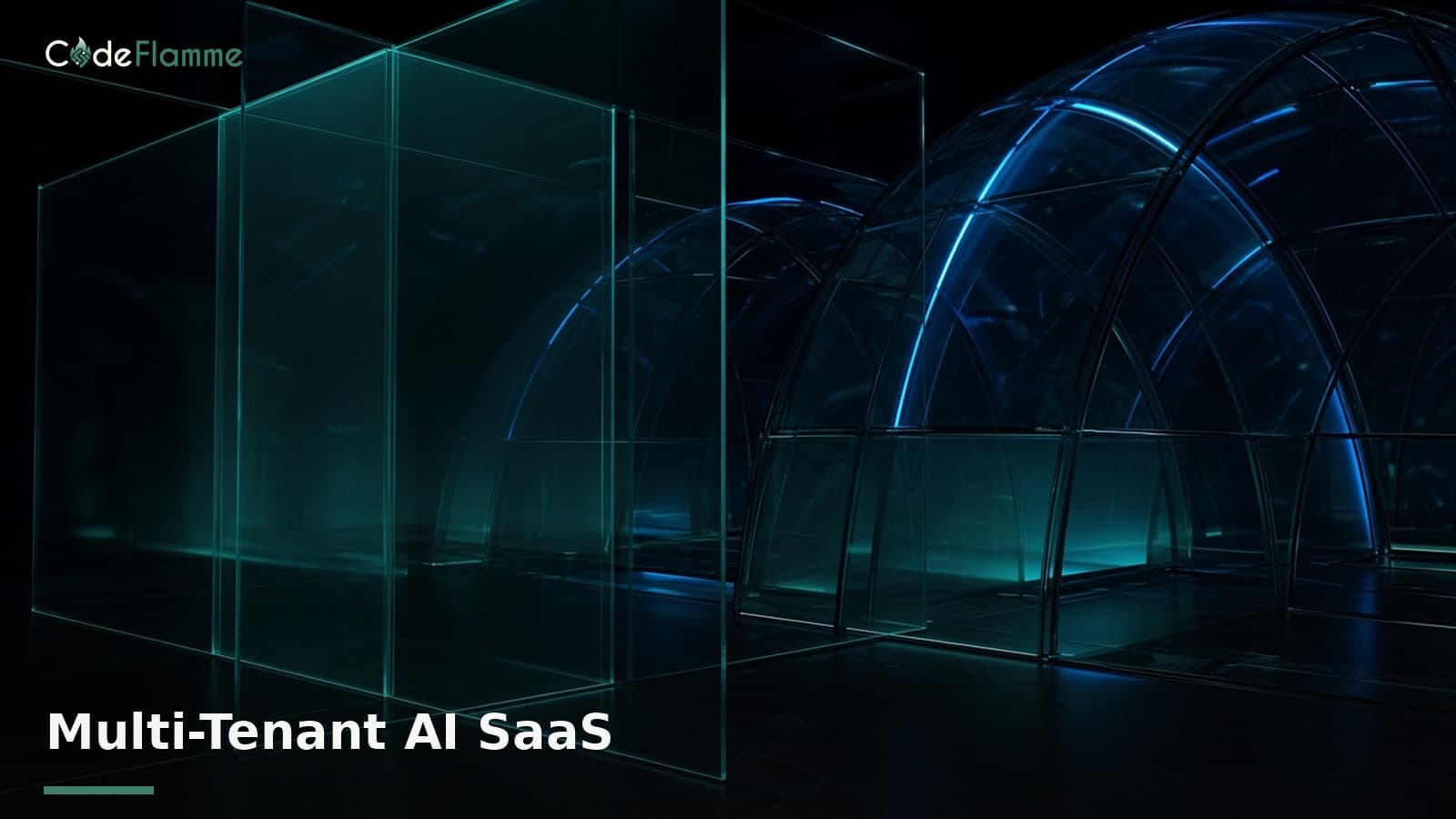
Classic multi-tenancy mistakes were already expensive: one missing WHERE tenant_id and Customer A saw Customer B. AI raises the blast radius. Now each tenant may have prompts, embeddings, usage quotas, model configs, and agent tool sessions. A cross-tenant RAG hit is not an awkward UI bug — it is someone else’s documents in your answer stream. In 2026, “we’ll add tenancy later” on an AI feature is one of the highest-cost architectural debts a SaaS can take. Retrofitting vector namespaces and prompt loaders after a year of pooled data is the migration nobody wants to fund.
What must be tenant-aware on day one
Rows. Every tenant-owned table carries tenant_id . Prefer database enforcement (for example PostgreSQL row-level security) so a forgotten filter still fails closed. Embeddings. Namespace or filter every vector query by tenant. Shared collections without hard isolation are the most common AI SaaS leak pattern. Prompts and runs. Load prompts by tenant with a global default. Log runs with tenant context. Enterprise tenants will ask for custom prompts; hardcoding a single global string makes every call site a rewrite. Caches and logs. Cache keys include tenant. Logs redact secrets and never become a cross-tenant search index by accident. Queues and workers. Background jobs inherit tenant context from enqueue time — not from whatever the worker “remembers.” Agent tools. Tool calls bypass your pretty UI middleware. Bind tenant to the execution session server-side. Never accept a model-supplied tenant ID as authoritative — prompt injection turns that into an argument an attacker can influence.
Isolation ladder: start simple, design the climb
Most early SaaS should start with a shared schema and strong row-level isolation. Schema-per-tenant or database-per-tenant is for compliance, noisy neighbors, or enterprise contracts that demand it. The expensive mistake is picking a silo model too early — or pooling forever with no path to promote a high-value tenant. Design so tenants can move up the isolation ladder without a full rewrite: clear tenant boundaries in code, migratable storage, and metering that already knows who spent what.
The one test that catches what review misses
Authenticate as Tenant A. Attempt every read and write against Tenant B identifiers — API routes, exports, admin tools, RAG queries, and agent tools. Assert failure or empty results. Run it in CI. Reviewers reading a single diff cannot see a boundary that only appears when a second tenant exists. AI coding agents are especially good at generating queries that work for the one tenant in the demo and forget the filter everywhere else.
Founder questions for any vendor shipping “AI SaaS”
“Show the vector filter that prevents cross-tenant retrieval.” “Where is tenant injected for tool calls?” “Can Tenant A’s fine-tune or few-shot examples ever serve Tenant B?” “How do you meter AI spend per tenant?” “What fails closed if RLS is misconfigured?” If the answer is a slide about model brands, you are buying demo theatre.
Where teams usually cut corners
Shared “global” embedding indexes for speed. Prompt templates hardcoded in application code. Logging full retrieval chunks. Letting the model choose which workspace ID to use. Skipping Tenant A vs Tenant B tests because “we only have internal users.” Each shortcut feels temporary. Each one becomes a production incident once the second paying tenant arrives. Another common miss: fine-tuning or few-shot examples built from pooled customer data. You cannot un-bake Tenant A’s language into weights that serve everyone. Prefer per-tenant configuration, or train only on data you own outright.
Operating model: metering and noisy neighbors
Isolation is not only about privacy. One tenant’s RAG crawl or agent loop can starve everyone else’s latency and token budget. Per-tenant rate limits, spend caps, and queue fairness belong next to the tenancy filter — not in a backlog labeled “scale later.” When an enterprise customer demands stronger isolation, you should already know which storage layers can be promoted (dedicated collection, dedicated database) without rewriting the product. That is the isolation ladder in practice: pool what is safe, silo what contracts require, document the promotion path.
A minimum viable security story for buyers
Procurement will ask how you prevent cross-tenant AI leakage. Have a one-pager: tenancy model, vector isolation approach, tool-call binding, audit retention, and the CI test that proves Tenant A cannot read Tenant B. Teams that cannot produce that page will lose deals to teams that can — regardless of which model brand sits on the marketing site.