
You Talk to the People Building It
No account managers relaying messages. You're in direct contact with the founder and senior engineers on your project — every sprint, every decision.

No fluff, no clickbait. Real thinking from engineers and product leaders on building scalable, AI-ready digital products.
8 categories · 37+ articles · updated 1/wk
WHAT WE WRITE ABOUT
NEW THIS WEEK
Fresh signal
Practical articles on engineering, AI, and product — no recycled hype.
Editor's Pick
Our most in-depth take right now — practical lessons from production builds, not theory.
WHY CODEFLAMME
We know the hesitation. Here's exactly how we're different.
No account managers relaying messages. You're in direct contact with the founder and senior engineers on your project — every sprint, every decision.
The team that scopes your project is the team that ships it. We don't swap engineers mid-project to free them up for someone else.
Your idea and IP are protected from the first real conversation — not after contracts are signed.
Every line of code, every design file, transfers to you on delivery. No licensing, no retained rights, no surprises.
All Articles
Eight categories of practical guides — filter below or use the search above to find what you need.
Showing 36 articles

Token spend is shaped by UX, caching, model routing, and per-tenant caps. Treat the LLM bill as a product surface — not a surprise cloud invoice.
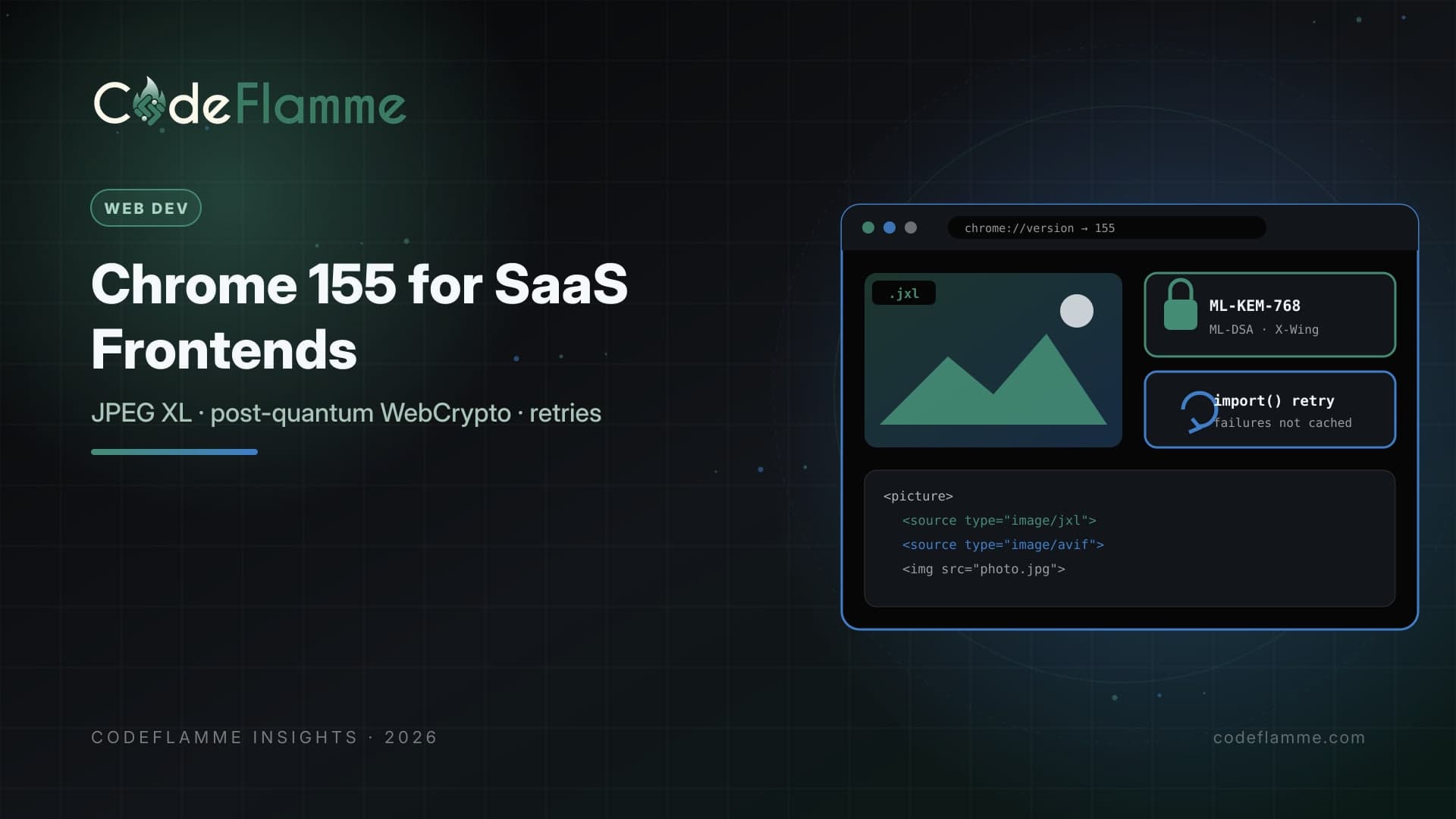
Chrome 155 ships JPEG XL decoding, post-quantum algorithms in the Web Cryptography API, retryable failed module loads, text module imports, and new HTML insertion and streaming methods. What SaaS frontend teams should adopt now, test carefully, or ignore for the moment.
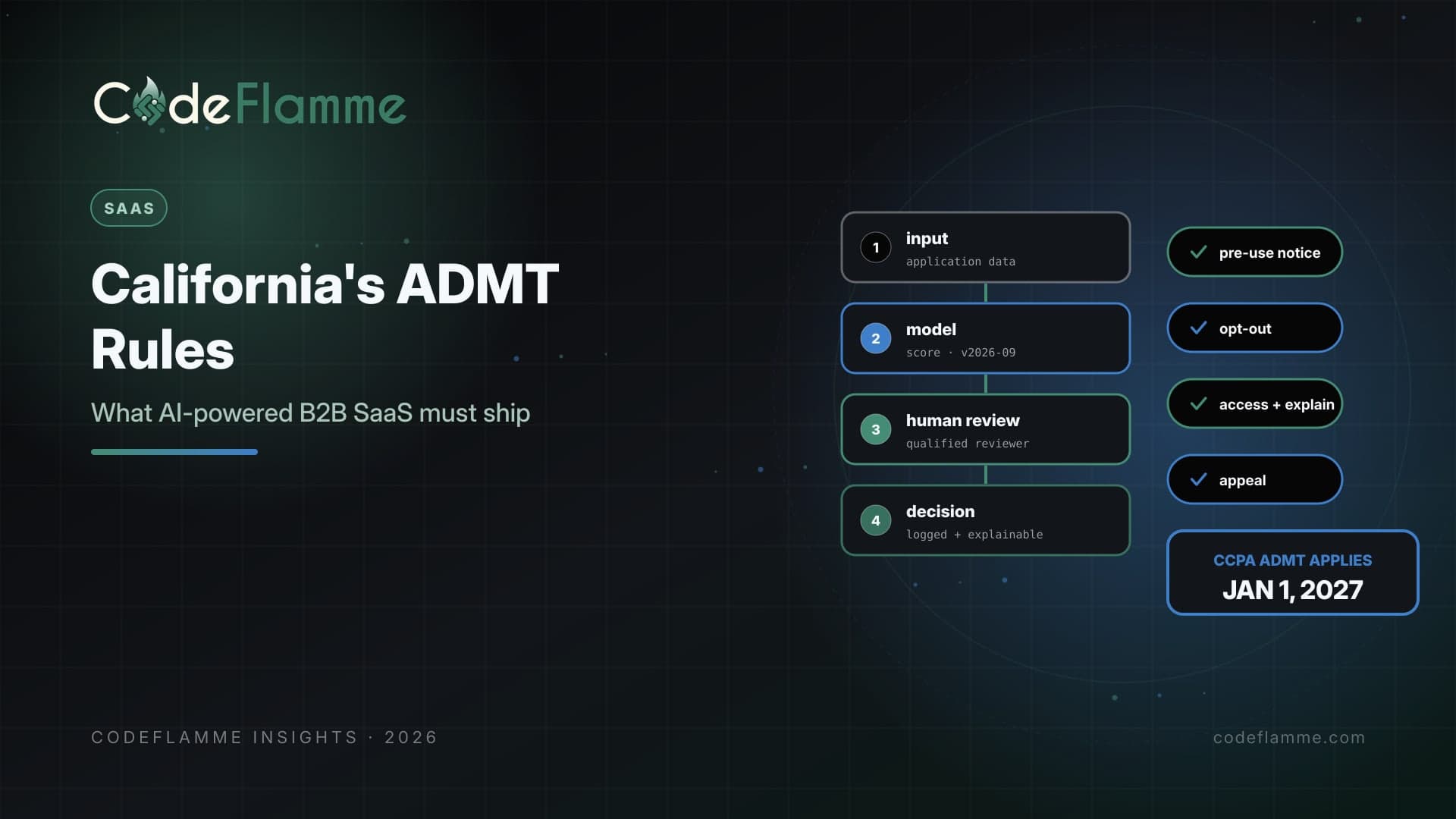
California's CCPA regulations on automated decisionmaking technology apply from January 1, 2027 to businesses using ADMT for significant decisions in employment, lending, housing, education, and healthcare. Your customers carry the obligations, but they will need your product to support notices, opt-outs, explanations, appeals, and risk assessments.
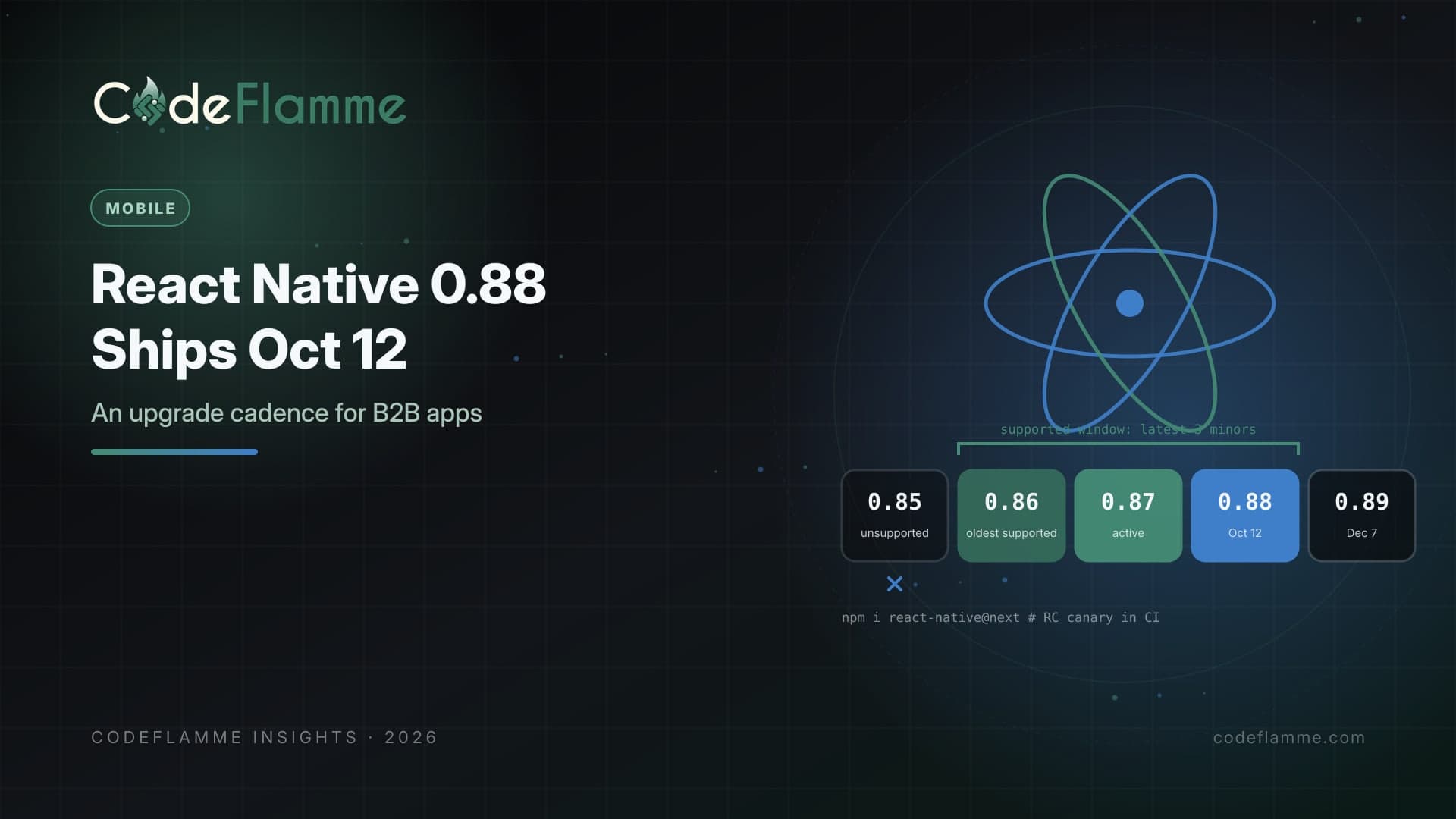
React Native 0.88 is scheduled for release on October 12, 2026, and under the project's support policy that pushes 0.85 out of the supported window. A founder guide to a predictable React Native upgrade cadence for B2B apps: testing release candidates, staying within three minors, and lining up with store requirements.
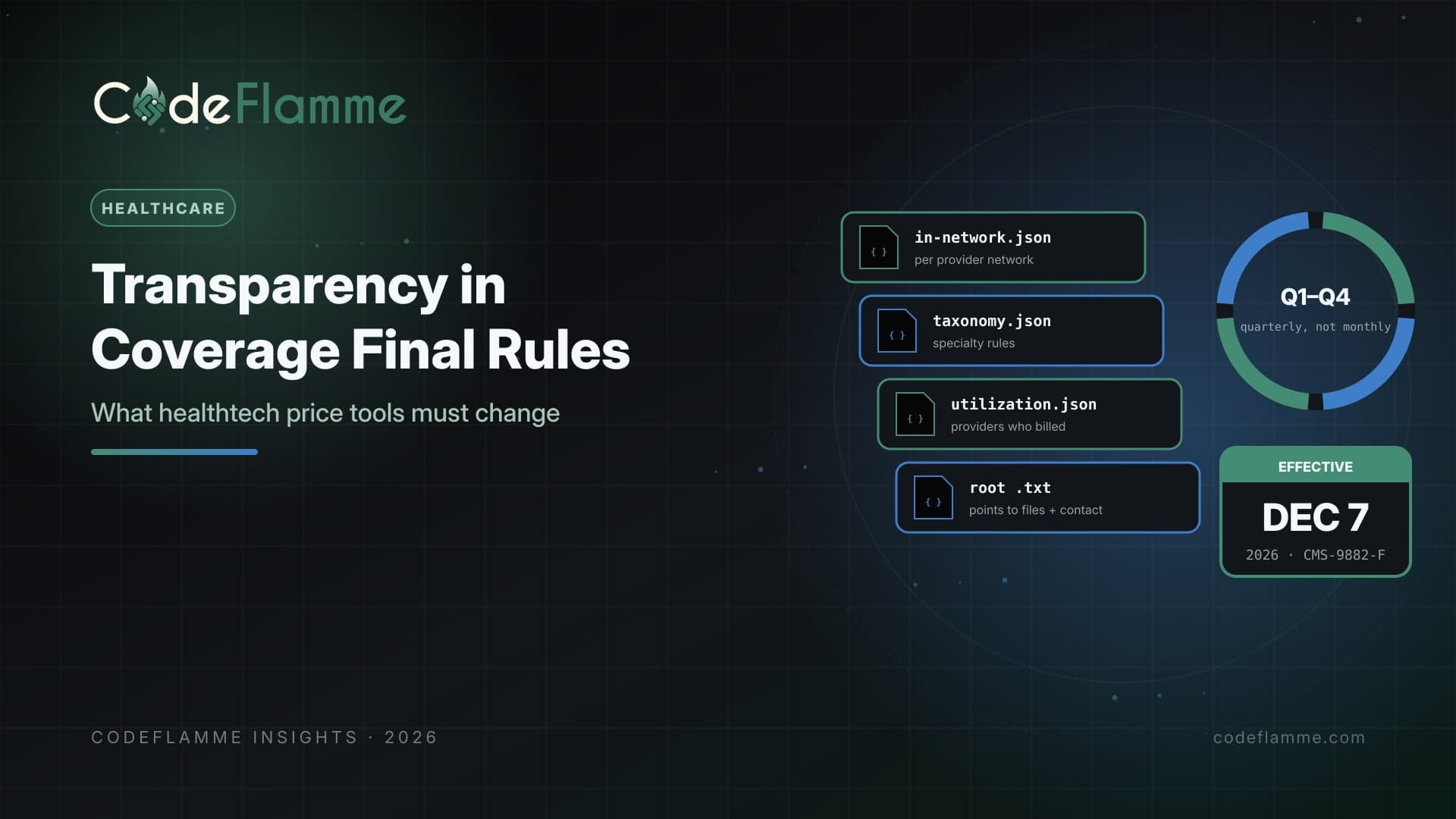
On October 5, 2026, CMS, Labor, and Treasury finalized major changes to the Transparency in Coverage rules, effective December 7, 2026: network-level rate files, new taxonomy, utilization, and text files, quarterly cadence, attestation, and phone-based cost estimates. What healthtech teams that produce or consume price data must change.
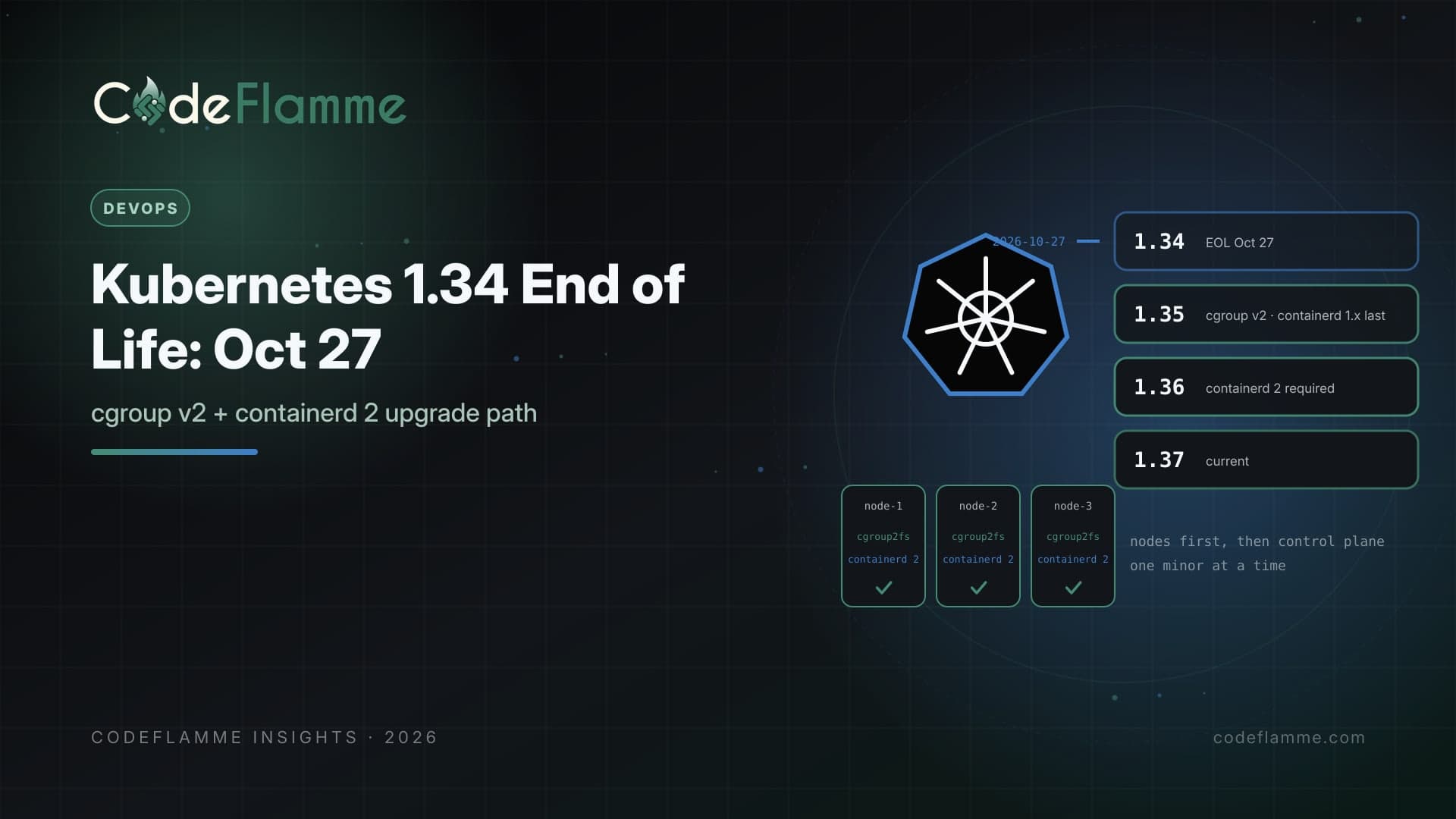
Upstream support for Kubernetes 1.34 ends on October 27, 2026. The next hop, 1.35, refuses to start the kubelet on cgroup v1 nodes by default and is the last release that supports containerd 1.x. A practical upgrade path for SaaS teams running self-managed or managed clusters.
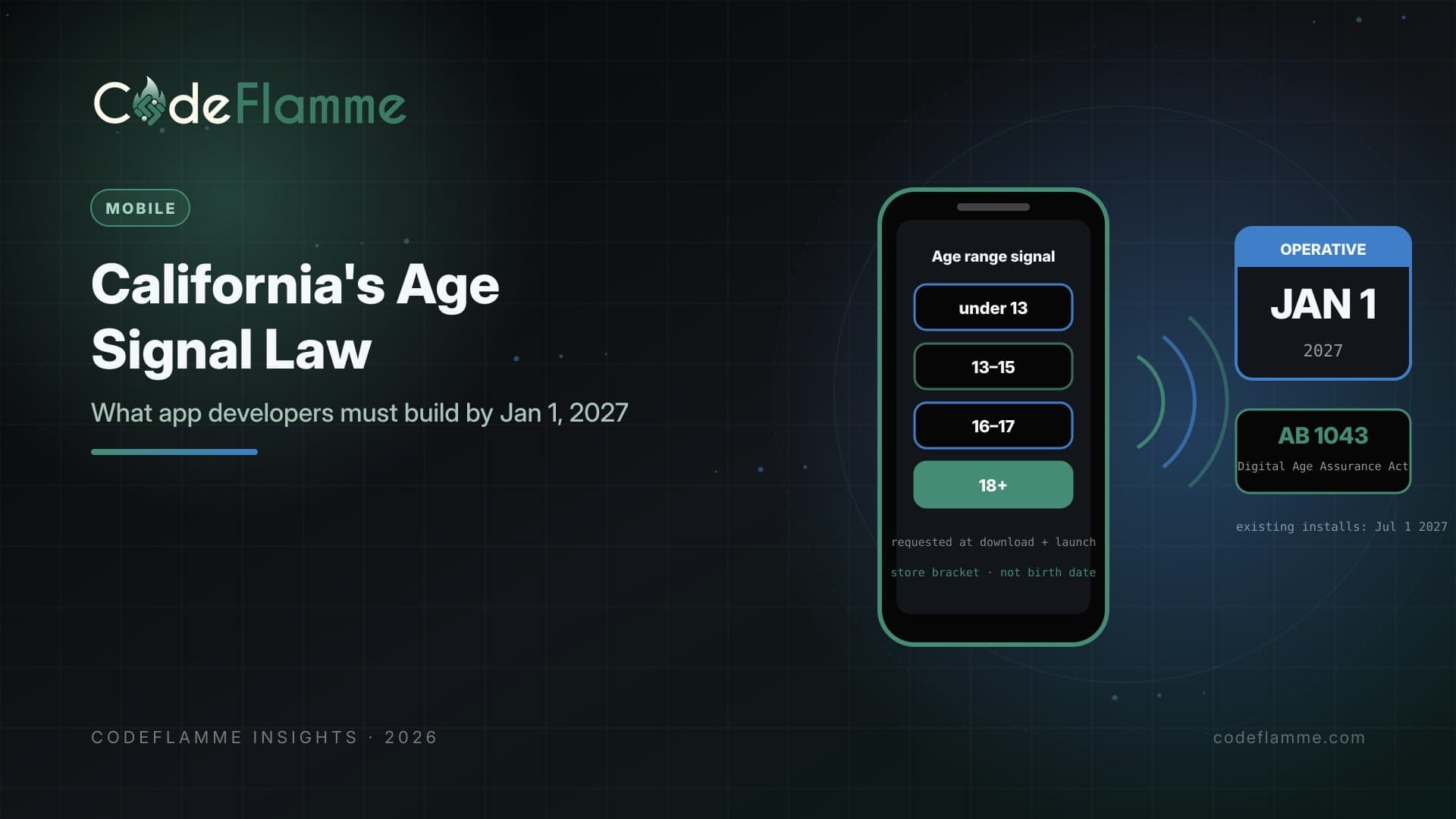
California's Digital Age Assurance Act (AB 1043) becomes operative on January 1, 2027. Developers must request an age-bracket signal from the operating system or app store when an app is downloaded and launched, and the signal creates actual knowledge of a user's age range. A practical build plan for mobile teams, including B2B apps.
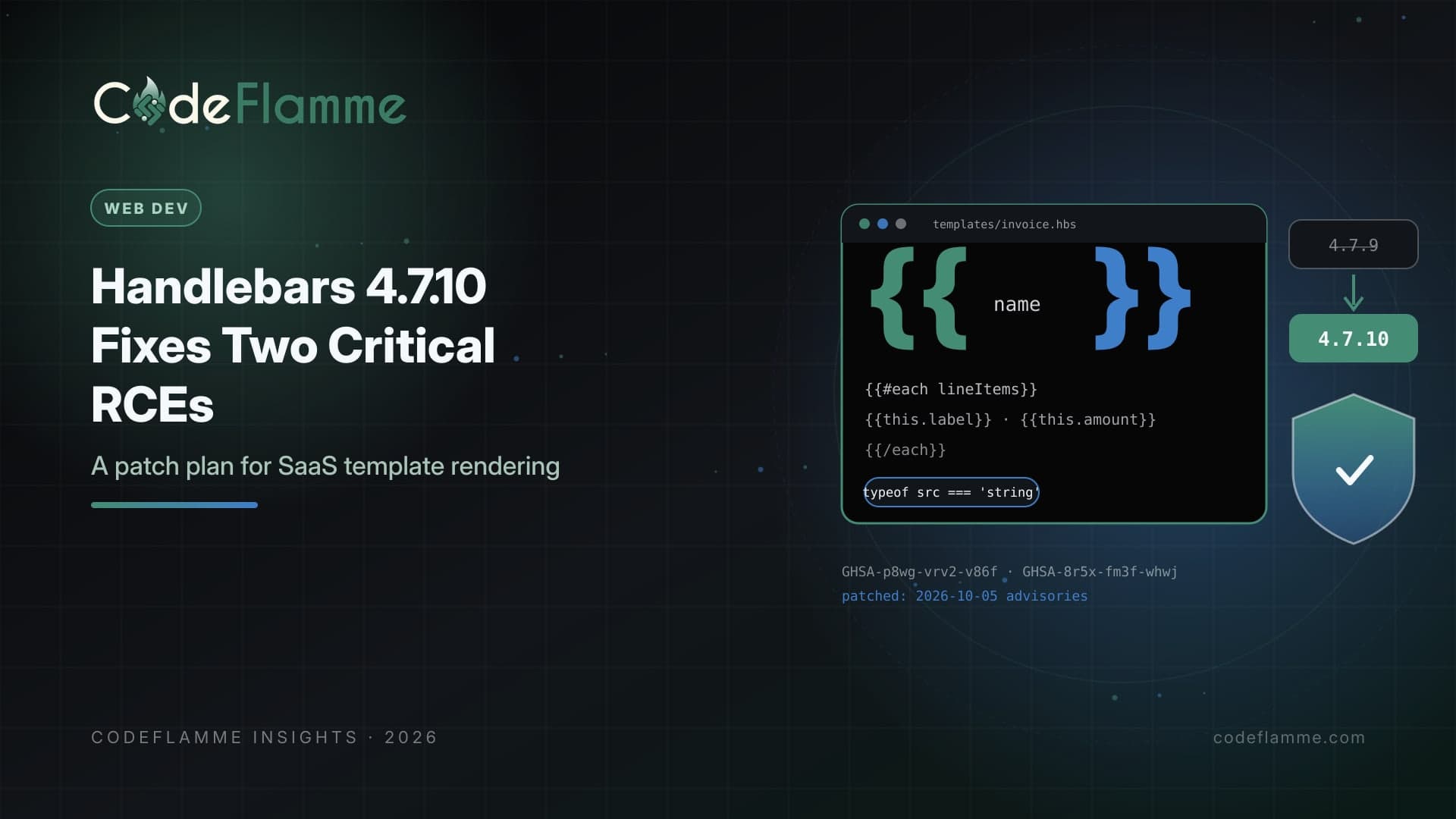
On October 5, 2026 the Handlebars maintainers published two critical advisories affecting every release from 4.0.0 through 4.7.9, both fixed in 4.7.10. Proof-of-concept code is public. Here is how SaaS teams that render emails, invoices, and customer-editable templates should find, patch, and harden Handlebars this week.
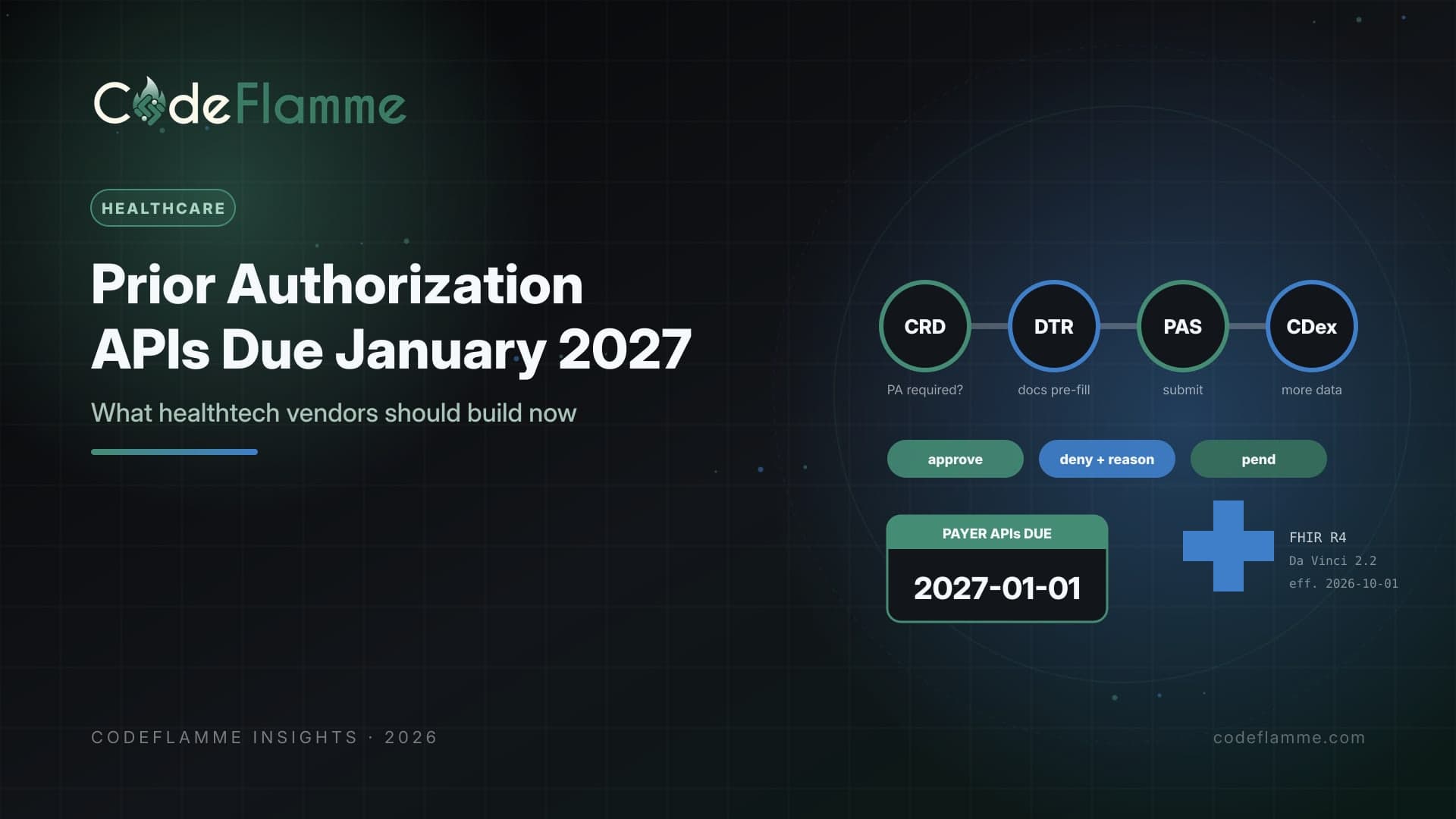
Under CMS-0057-F, impacted payers must stand up FHIR Prior Authorization, Provider Access, Payer-to-Payer, and enhanced Patient Access APIs, generally by January 1, 2027, and updated Da Vinci standards took effect October 1, 2026. What this means for healthtech startups building for payers, providers, and patients.
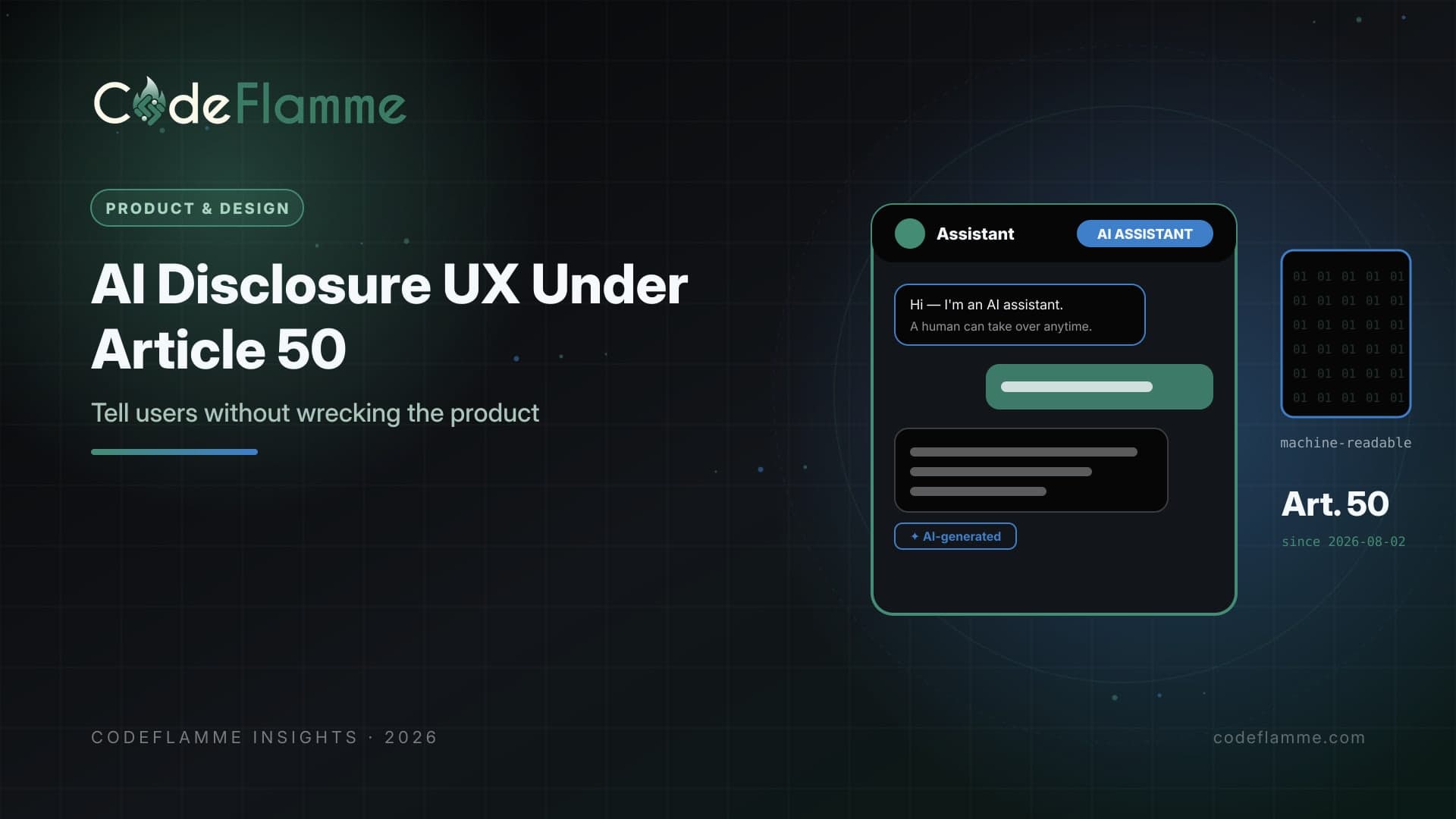
EU AI Act Article 50 transparency obligations have applied since August 2, 2026. A product design guide to chatbot disclosure, labeling generated content, and the December 2, 2026 marking deadline for legacy generative systems — without burying your UI in banners.
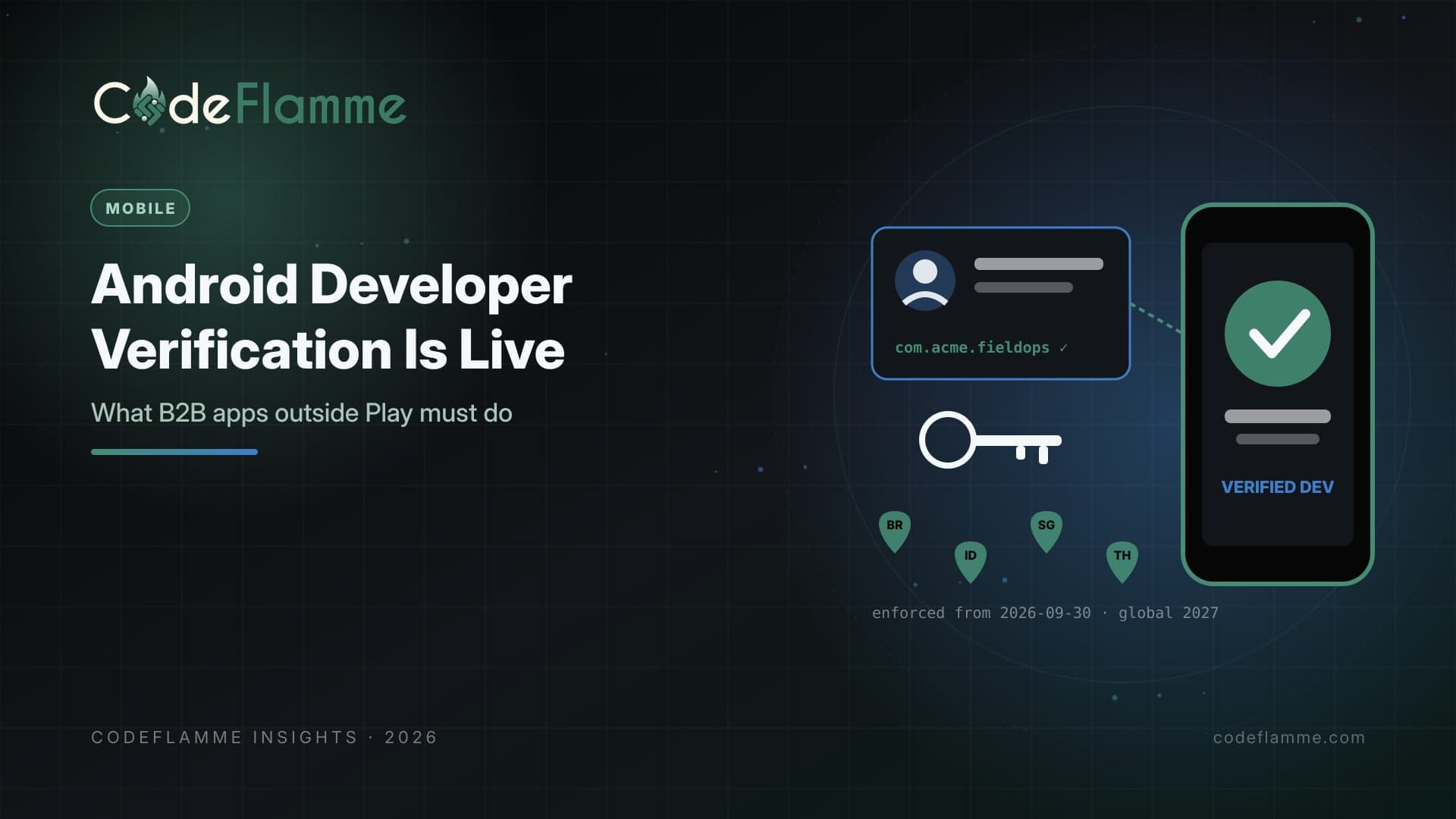
Since September 30, 2026, installs from participating stores in Brazil, Indonesia, Singapore, and Thailand require apps registered to verified developers, with a global rollout planned for 2027. A founder checklist for B2B Android apps distributed through Play, MDM, and direct APKs.
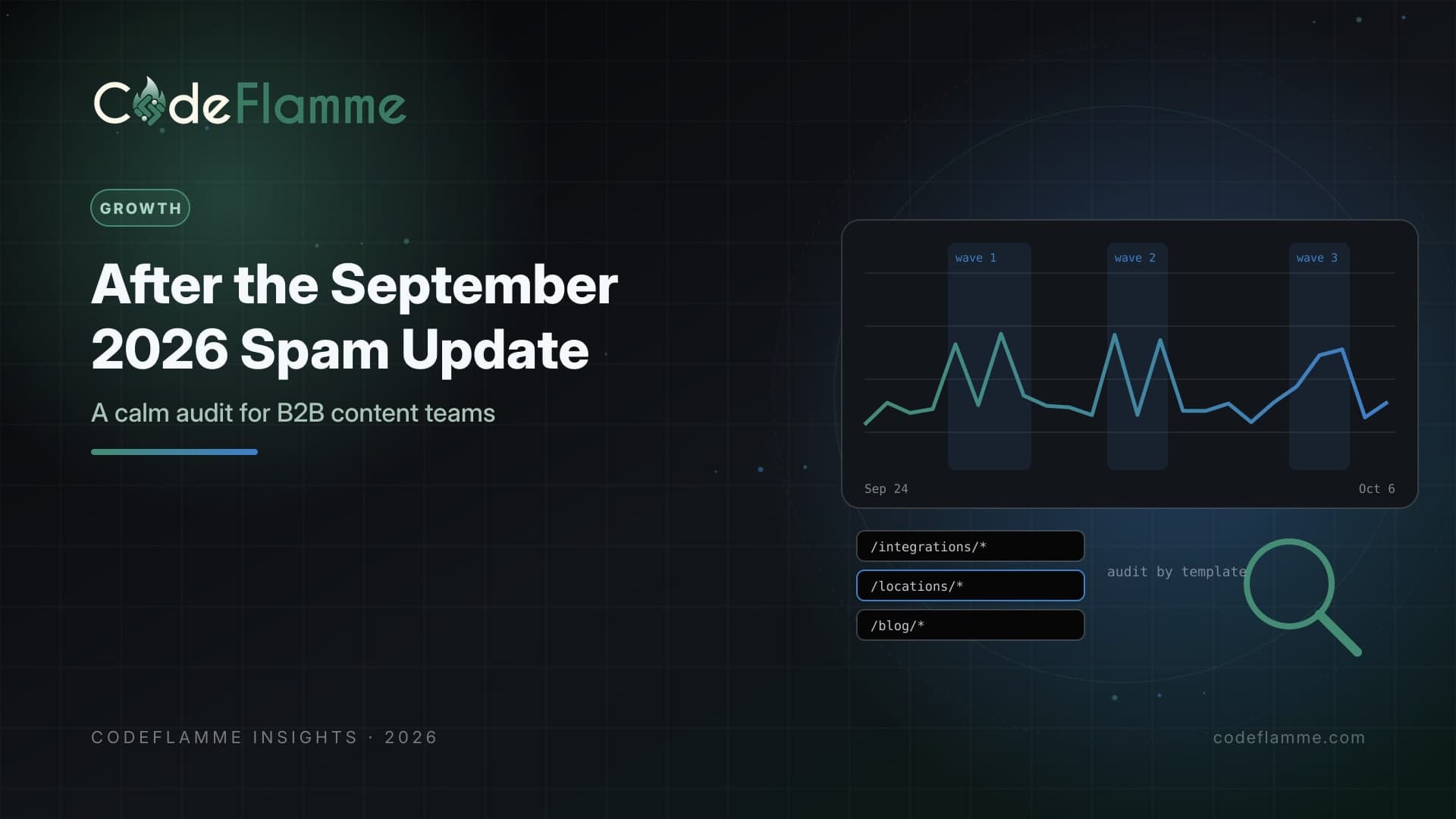
Google's September 2026 spam update began on September 24 with a rollout window of up to two weeks, longer than earlier spam updates this year. Here is how B2B SaaS and services teams should read their data, separate spam-policy risk from normal volatility, and fix what matters.
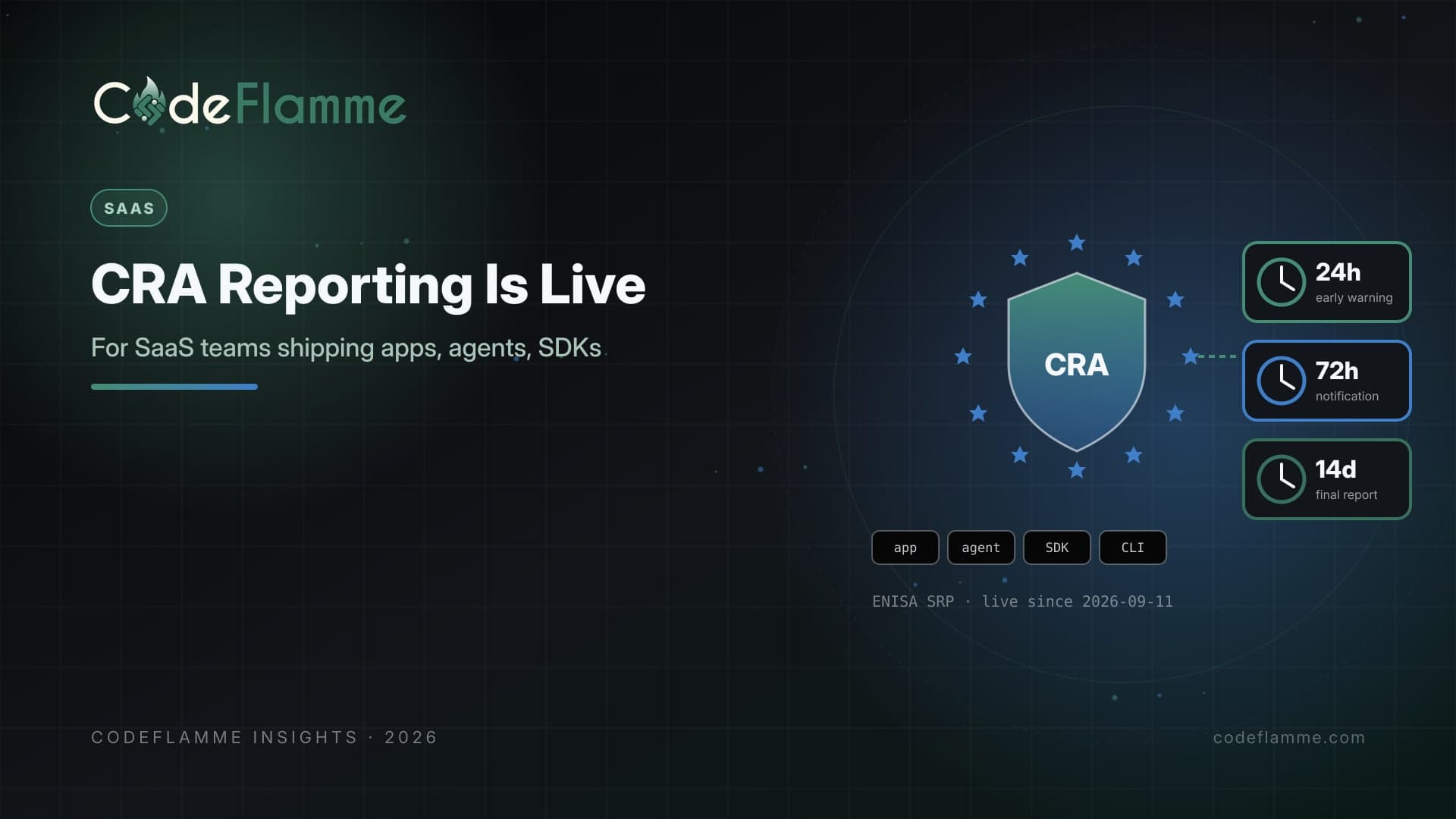
Since September 11, 2026, manufacturers of products with digital elements sold in the EU must report actively exploited vulnerabilities and severe incidents through ENISA's Single Reporting Platform within 24 hours. Pure SaaS is mostly out of scope, but the mobile apps, desktop agents, CLIs, and SDKs many SaaS companies ship are not.
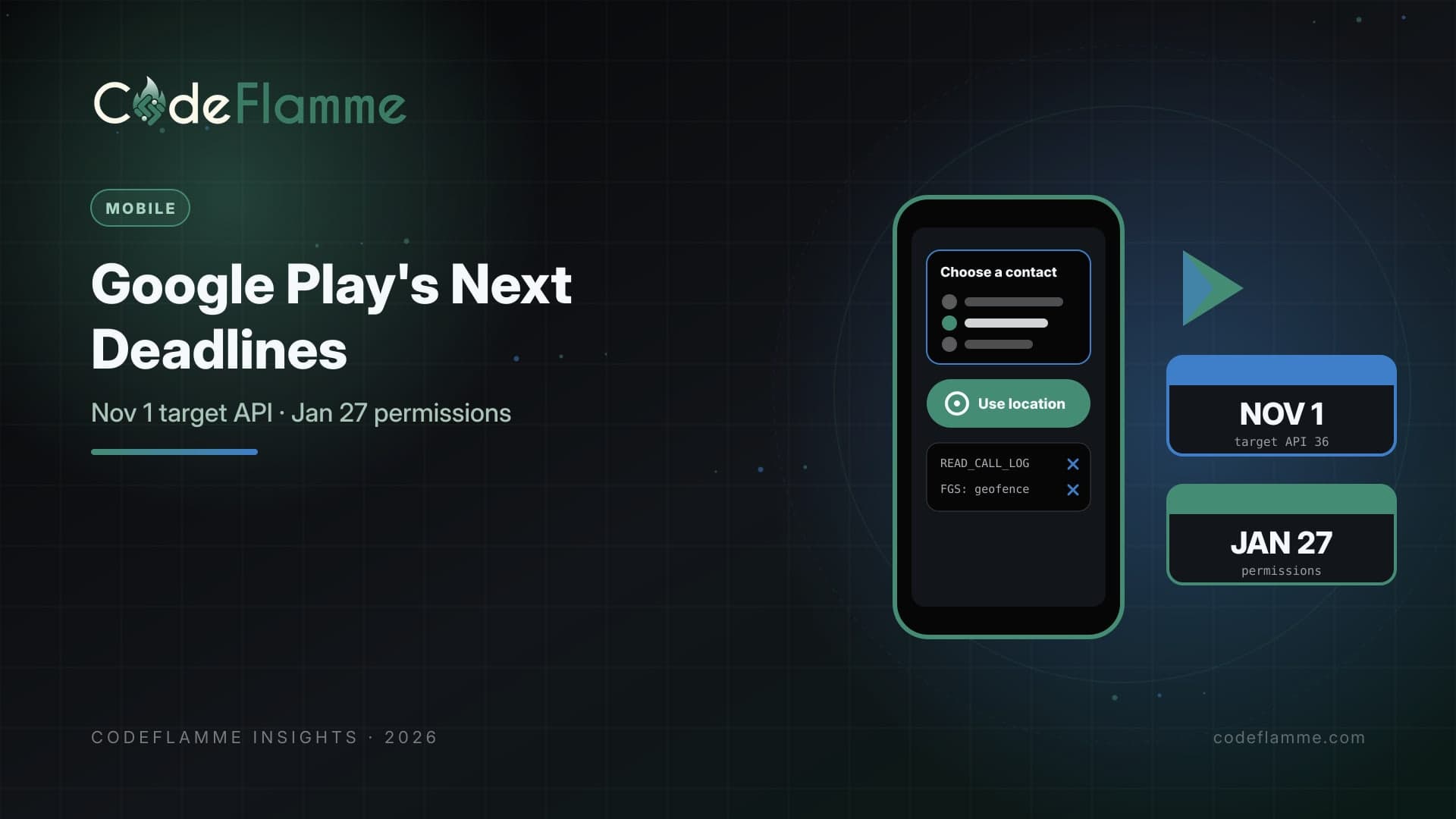
Apps that took Google Play's target API extension must target Android 16 by November 1, 2026, and new Contacts, Location, call-log, and foreground-service policies take effect January 27, 2027. What B2B Android teams should ship, and in what order.
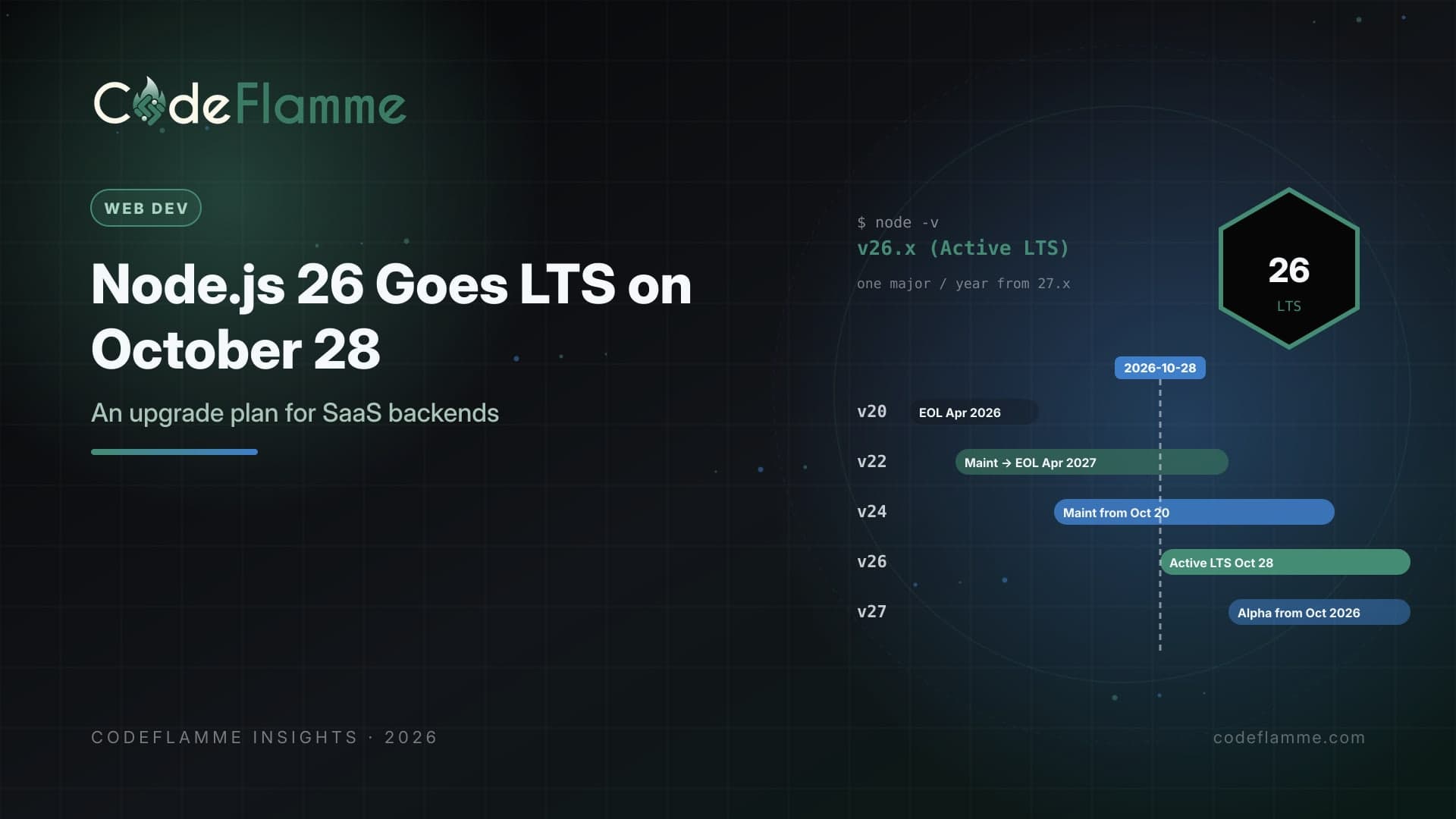
Node.js 26 is scheduled to become Active LTS on October 28, 2026, while Node.js 24 drops to maintenance on October 20 and Node.js 22 reaches end of life in April 2027. A founder-level plan for upgrading SaaS backends without a fire drill, plus what the new one-release-a-year model changes.
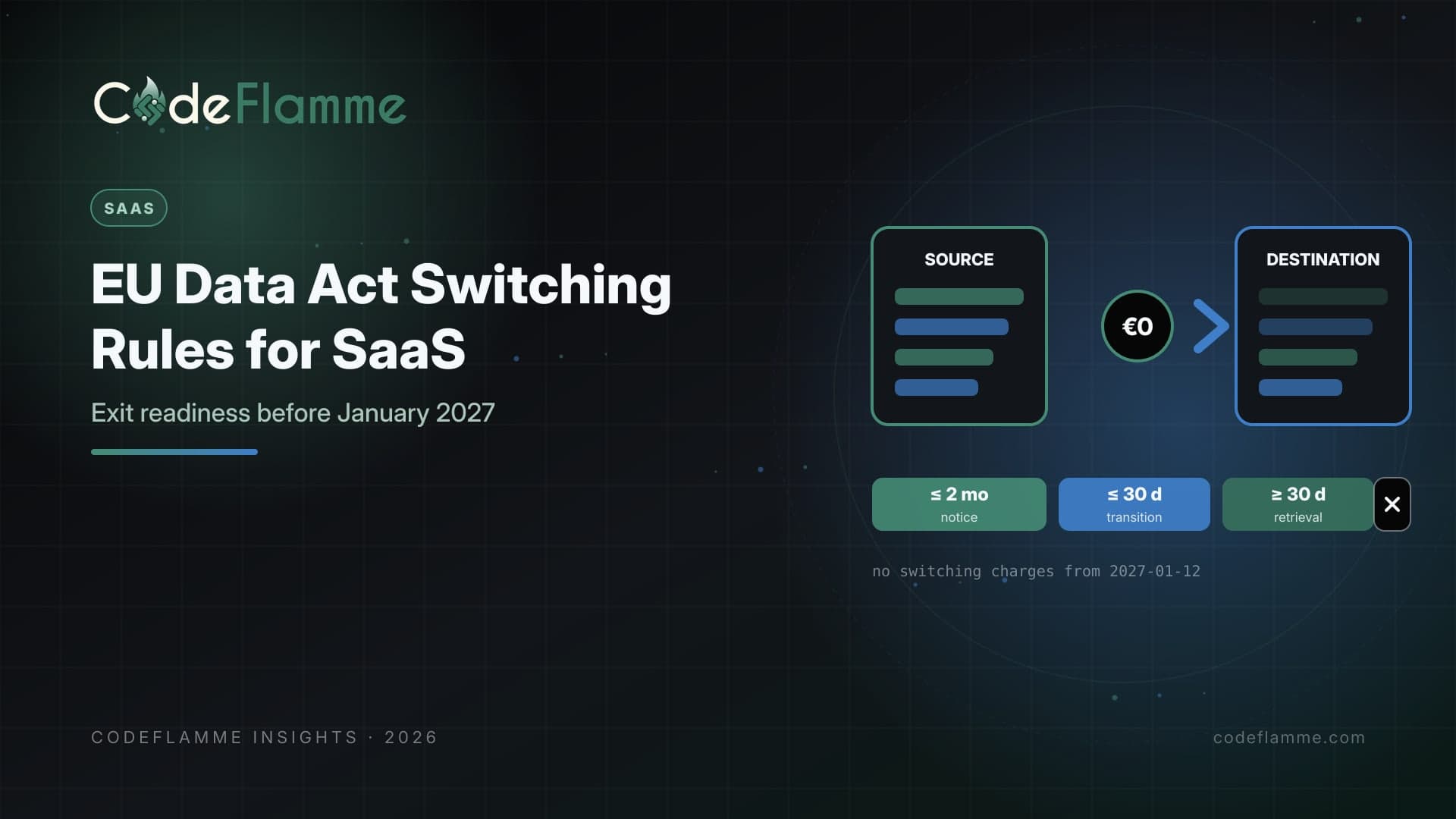
From January 12, 2027, the EU Data Act bans switching charges, including data egress fees, for data processing services, and SaaS is in scope. A founder guide to the contract clauses, export tooling, and offboarding workflow your product needs now.
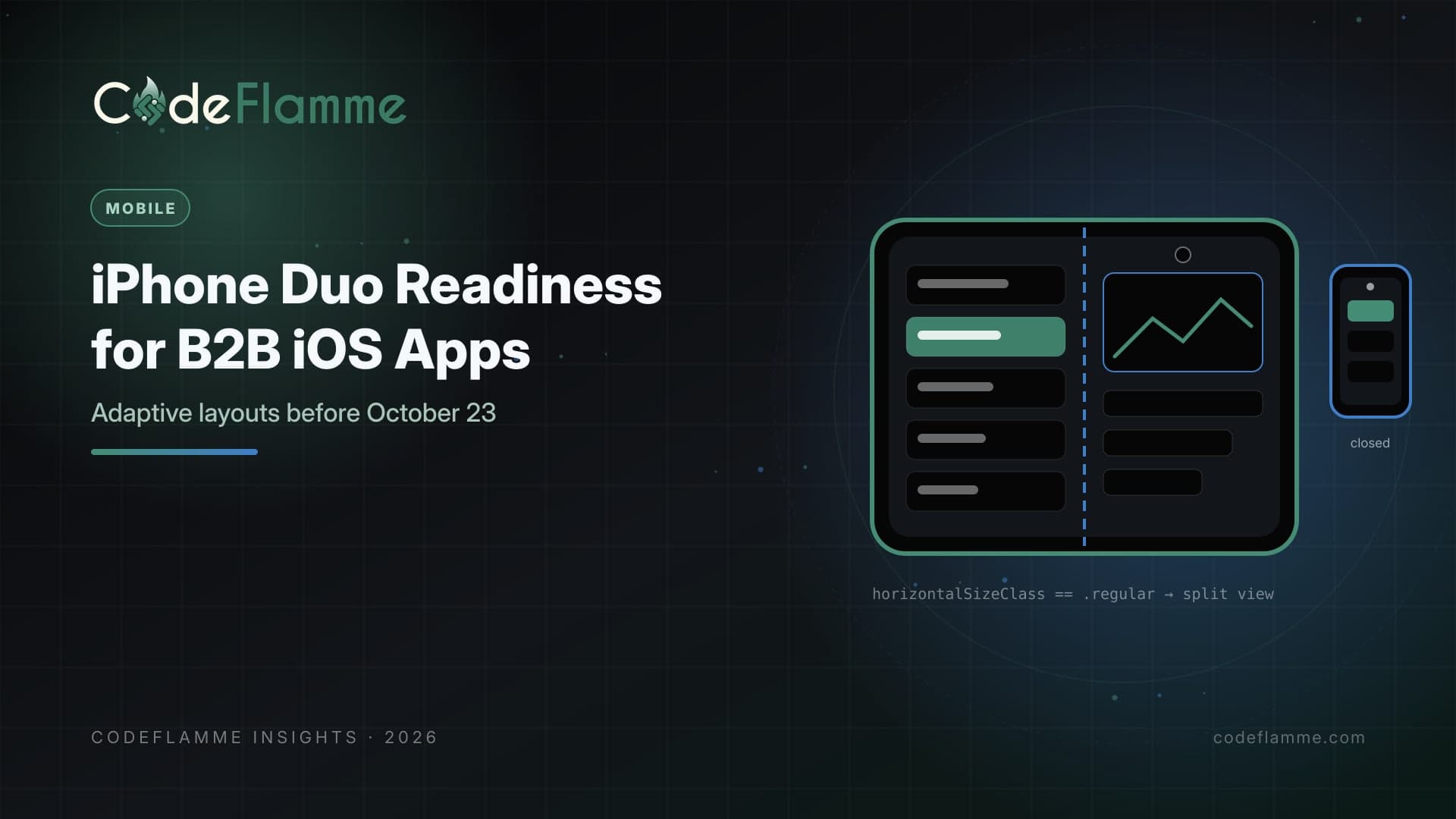
Apple's foldable iPhone Duo ships October 23 running iOS 27.1, with outer and inner displays, partially folded poses, and new reserved regions. A founder checklist for B2B iOS apps that hard-code screen sizes, custom toolbars, or camera flows.
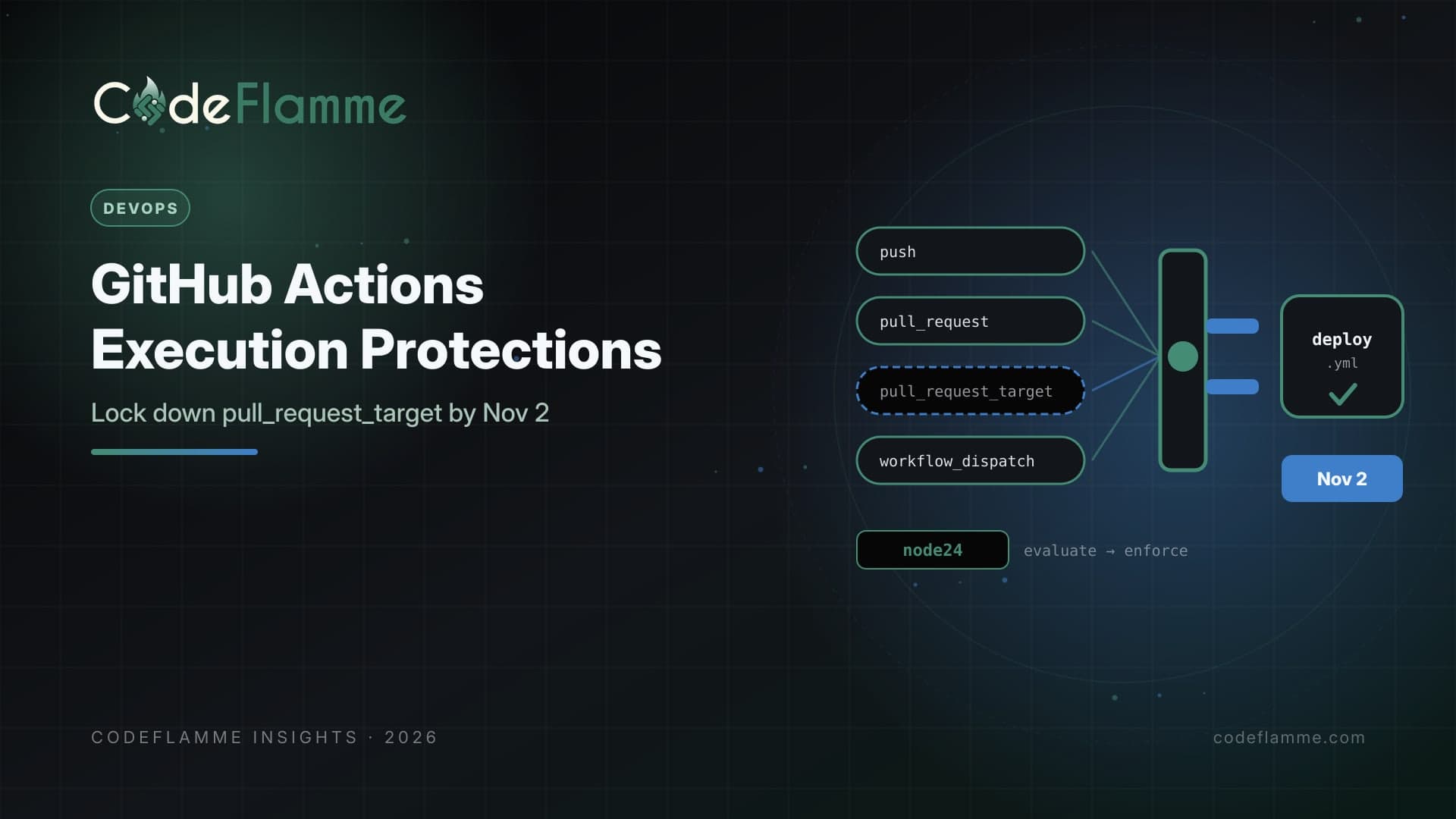
GitHub made workflow execution protections generally available on September 17, 2026, with a default rule that will block pull_request_target in many public repositories from November 2. Plus Node 20 is gone from Actions runners. A founder checklist for CI that cannot be hijacked.
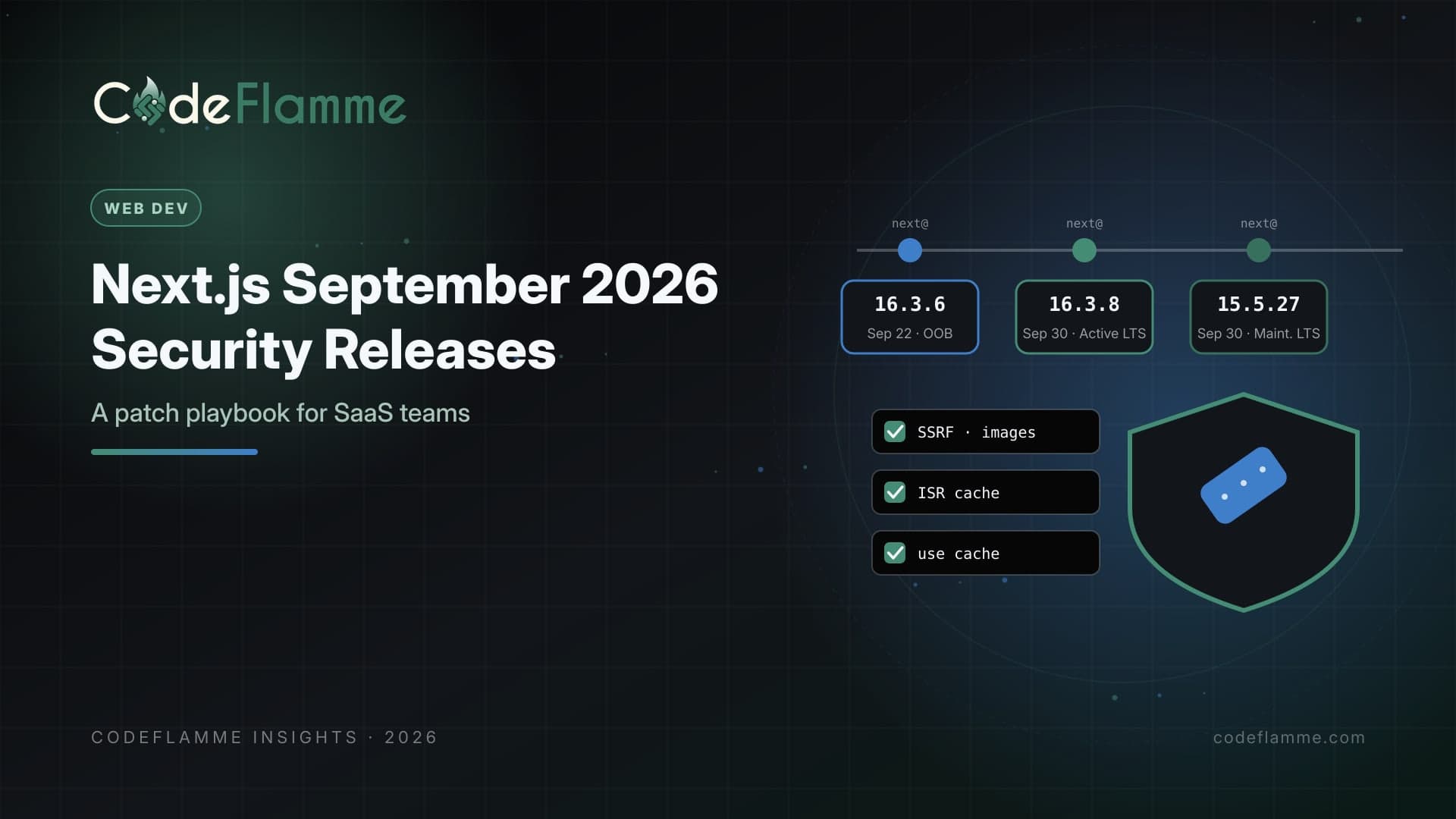
Next.js shipped an out-of-band fix on September 22 and a scheduled security release on September 30, 2026. A founder playbook for patching fast, triaging advisories by how your app is actually deployed, and making the next release boring.

Chatbots forget; durable agents wait on humans, survive deploys, and finish multi-hour work. Architecture notes for Next.js and modern AI SDKs.
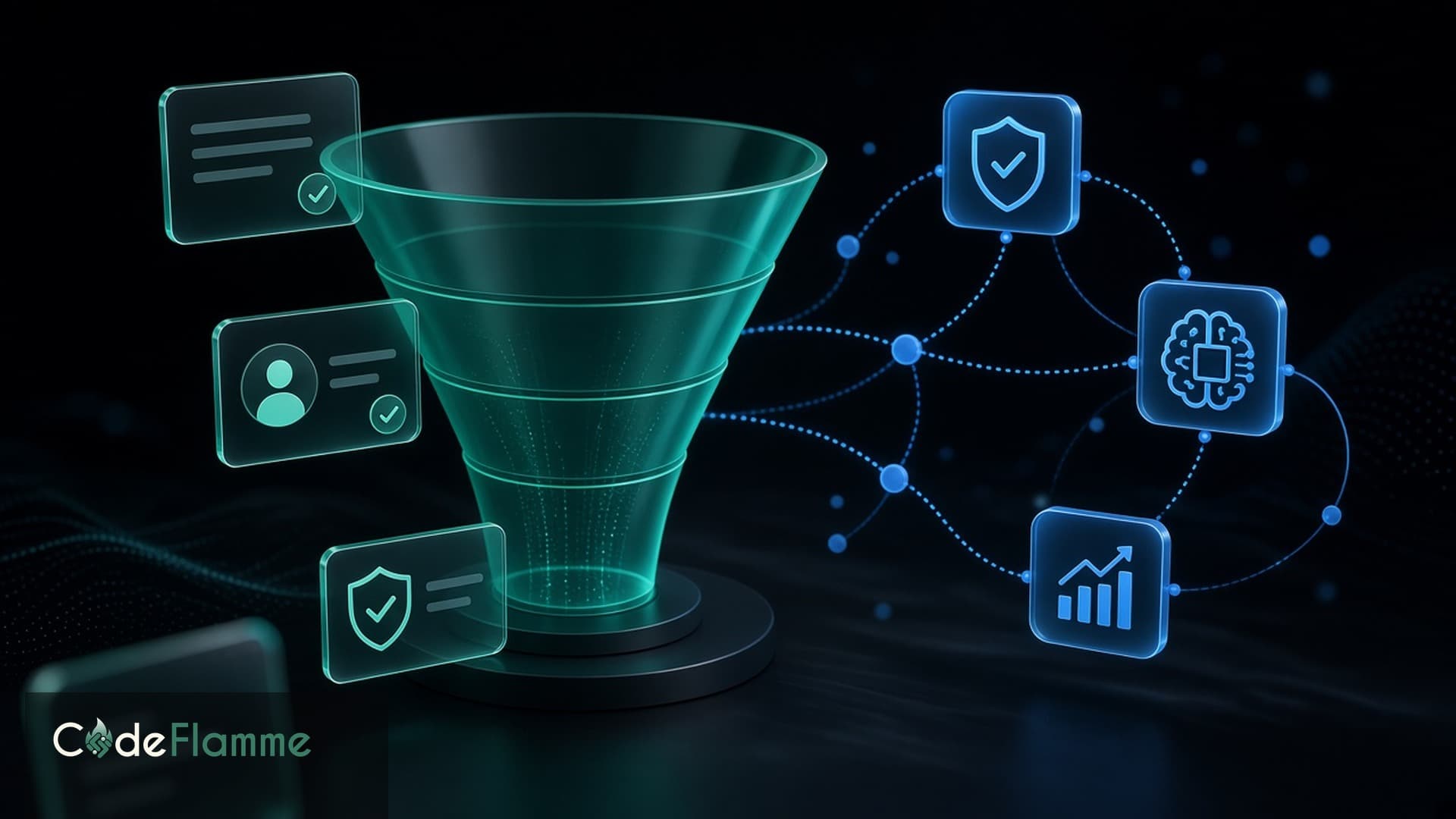
AI features pull security, legal, and data science into self-serve funnels. Build trust artifacts that keep PLG moving without inventing ROI theater.

Agents without logs, evals, retries, and versioned prompts become un-debuggable incidents. Observability is the real launch checklist.

Healthcare, legal, and finance buyers increasingly demand private or open-weight inference. Here is how founders trade cost, control, and product velocity.
Horizontal chatbots dilute ICP focus. Vertical AI that owns one expensive workflow wins regulated niches and clearer ROI conversations.
Agentic products that can spend money, delete data, or send email need durable approval gates — not a checkbox labeled “AI safety.”

AI consumption costs break classic seat packaging. Here is how founders design hybrid seat+usage and outcome pricing without inventing margin fairy tales.

Not every product needs an AI slide in 2026. Use this founder checklist to decide when AI is a workflow win — and when it is cost, risk, and support load without pull.

AI makes SaaS multi-tenancy harder, not optional. Shared embeddings, prompt caches, and agent tools are how Tenant A meets Tenant B. Here is the isolation bar founders should demand.
AI agents are starting to call tools the way browsers call APIs. MCP is the interoperability layer. Here is how founders should decide whether to expose it — without abandoning REST.
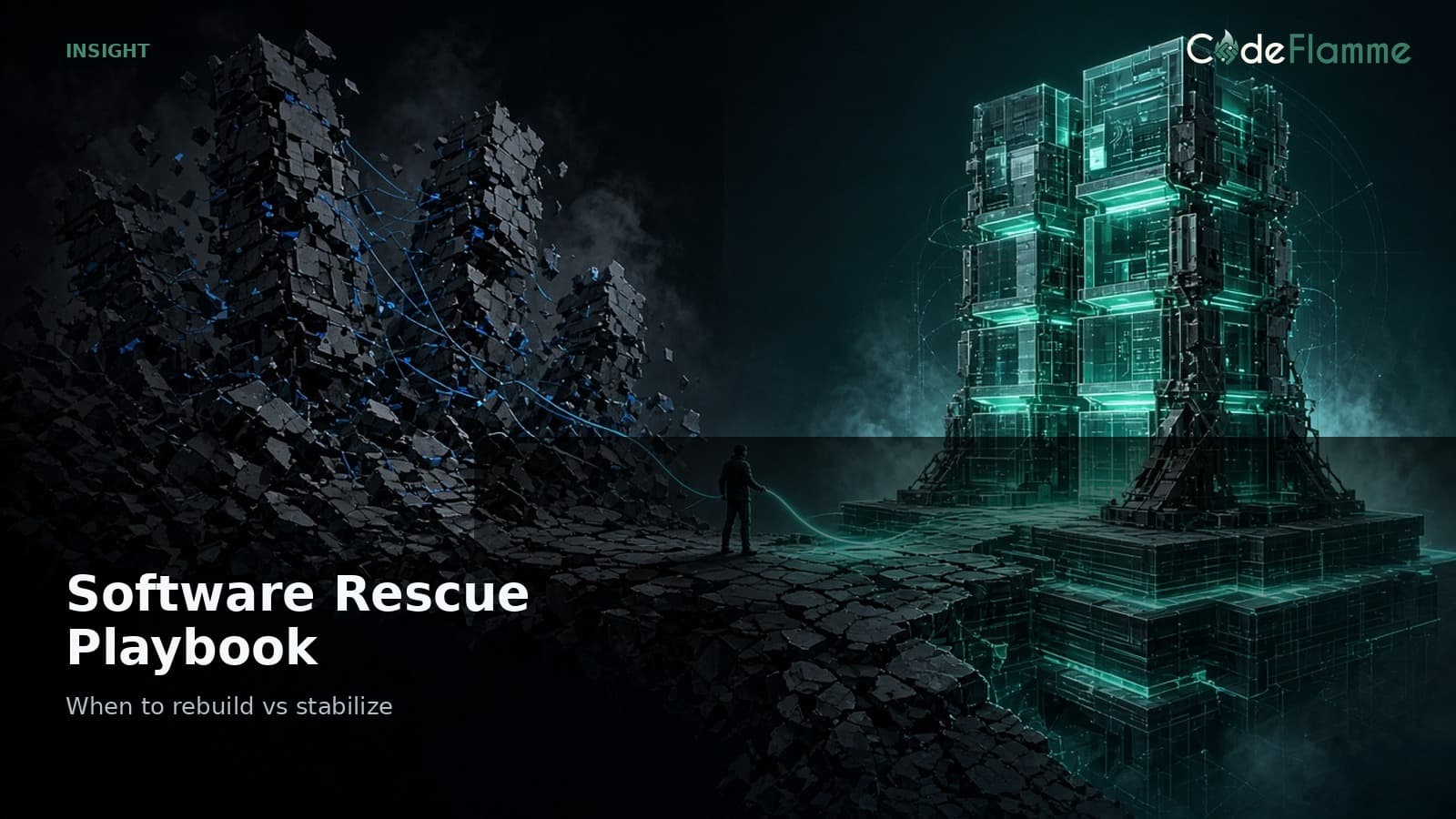
Failed engagement? Use this founder playbook: rebuild vs stabilize, week-1 triage, and senior continuity — the pattern behind serious LMS/product rescues. Facts only, no invented metrics.

Client-only CRA shells ship empty HTML to crawlers. Here is why that kills organic discovery, what Next.js SSR/SSG fixes, and a founder checklist — companion to the Emprenur rebuild. No invented rankings.
Agencies, freelancers, and in-house each win in different seasons. A founder frame for hidden costs — bench rotation, context loss, hiring time — and a decision checklist. No invented metrics.
AI coding agents are shipping real PRs. Verification — review, tests, ownership, and evals — is the bottleneck founders should contract for, not assume.
A chat UI on GPT is not production RAG. Use this founder checklist — retrieval, citations, evals, tenancy, cost — to demand systems that survive real users.

Agencies sell seniors and deliver rotation. Here's a practical founder checklist for hiring a senior-only team — no account managers, no junior handoffs, continuity written into the engagement.
Typical MVP work lands around $5,000–$15,000 when the scope stays ruthless. Here's what that band buys in 2026 — and which decisions (integrations, mobile, AI, compliance) push you past it.
Tell us what you are building. We will respond within 24 hours with a clear, honest assessment — no pressure, no sales pitch.
NDA protected · Reply within 24 hours · No commitment required