Every founder can ship a chat box. Few can own an expensive workflow end to end. That gap is why horizontal “AI assistants for everyone” struggle to hold price or attention, while vertical products that remove a painful, costly process earn budget — especially in regulated industries where buyers already know the cost of delay and error. Vertical does not mean tiny. It means you pick one job where the workflow, data, and compliance constraints are specific enough that a general chatbot is a toy. Then you deepen until switching away hurts.
Chat is a surface; workflow is the product
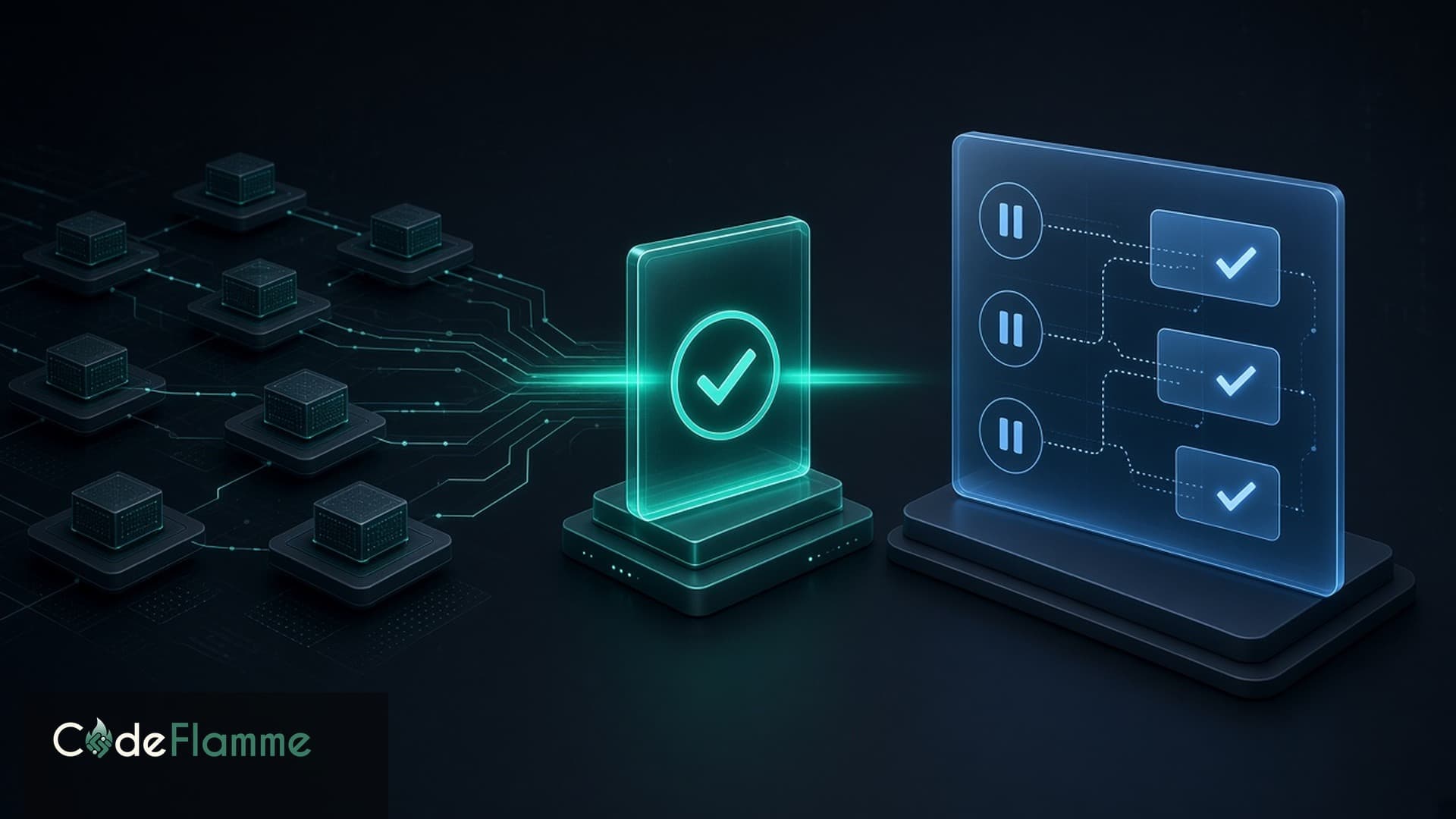
Chat is how users express intent. The product is what happens after: fetch the right records, apply policy, call tools, ask for approval, write results back to the system of record, and prove what happened. Horizontal chat stops at plausible answers. Vertical AI ships the last mile into the systems of record your ICP already lives in. If your roadmap is “better prompts and more integrations” without naming a single workflow owner, you are still in chatbot land. Name the workflow in customer language: prior authorization packet assembly, lease abstraction, chargeback evidence packs, clinical documentation assist — not “AI for healthcare.”
ICP focus beats model novelty
Vertical AI forces ICP discipline. You learn the documents, the exception paths, the auditors’ questions, and the politics of who signs. That knowledge compounds into evals, retrieval corpora, and tool designs competitors cannot copy from a model upgrade alone. Horizontal products chase every persona and inherit every objection. Vertical products can refuse scope: we do this workflow extremely well; we do not pretend to be your general knowledge worker. Buyers in regulated niches often prefer that honesty because it maps to how they buy software today.
Why regulated niches reward depth
Healthcare, legal, finance, and insurance already pay for specialists and process. They also demand auditability, access control, and data residency. A vertical agent that produces artifacts a compliance team recognizes will outcompete a clever general chat that cannot explain its steps. That does not mean inventing certifications you do not have. It means designing permissions, logs, and human gates that match how those buyers already review work. Depth here is operational, not just linguistic fluency on domain jargon.
A build sequence that stays honest
Week one: shadow the workflow without AI. Map inputs, systems, handoffs, and failure modes. Week two: automate the most mechanical slice with retrieval and structured outputs — still human-owned. Week three: add tools with approval gates for irreversible steps. Week four: instrument quality with real evals from historical cases, not vibes. Resist the urge to expand horizontally until the first workflow shows retention and willingness to pay. Expansion should be adjacent steps in the same value chain, not a new industry because a model demo looked good.
How to talk about ROI without fake numbers
Do not invent industry averages. Ask the buyer what the workflow costs them today in people hours, cycle time, error rework, and risk. Your job is to show a credible path to compressing those costs with measurable checkpoints — not to quote a percentage you cannot defend. Bring before/after artifacts: time-to-complete on a sample set, exception rates caught by humans, auditor-ready logs. Vertical AI sells with proof of process, not with a chatbot personality.
How to choose the first workflow
Score candidates on five axes: frequency, cost of delay, error cost, data availability, and willingness of a named owner to partner. The winning workflow is rarely the flashiest demo. It is the one where a department already burns calendar time and has artifacts you can evaluate against. Talk to the people who do the work today — not only the executive who wants “AI transformation.” The operators know the exception paths that will break a naive agent. Those exceptions become your product backlog and your moat.
Distribution inside the vertical
Vertical products often sell through associations, specialized consultants, and adjacent software. Build integrations where the workflow already starts and ends. A beautiful chat that lives nowhere in the daily stack loses to a plainer tool that writes into the system of record with an audit trail. Content and SEO should speak the workflow language of the niche, not generic AI hype. Your Insight library, docs, and landing pages should sound like the buyer’s Tuesday — because that is when budget is justified.
When to widen — and when not to
Widen only after retention and payment prove the wedge. Adjacent expansion means the next step in the same value chain or the same buyer’s neighboring workflow — not a leap to a new industry because a model suddenly “understands” it. Horizontal sprawl reintroduces the ICP confusion you escaped. If a customer asks for a general assistant on top of your vertical agent, consider a constrained copilot inside the same workflow boundary. Keep the brand promise narrow even when the model feels general.
Evals that match the niche
Generic chatbot benchmarks will not tell you if prior-auth packets are complete or if lease clauses were missed. Build evals from historical work product with expert labels. Pay domain reviewers. The cost of niche evals is part of the vertical moat — horizontal competitors rarely invest until it is too late. Publish (carefully) how you measure quality so buyers see seriousness. You do not need vanity leaderboard scores; you need a method a skeptical operator respects.