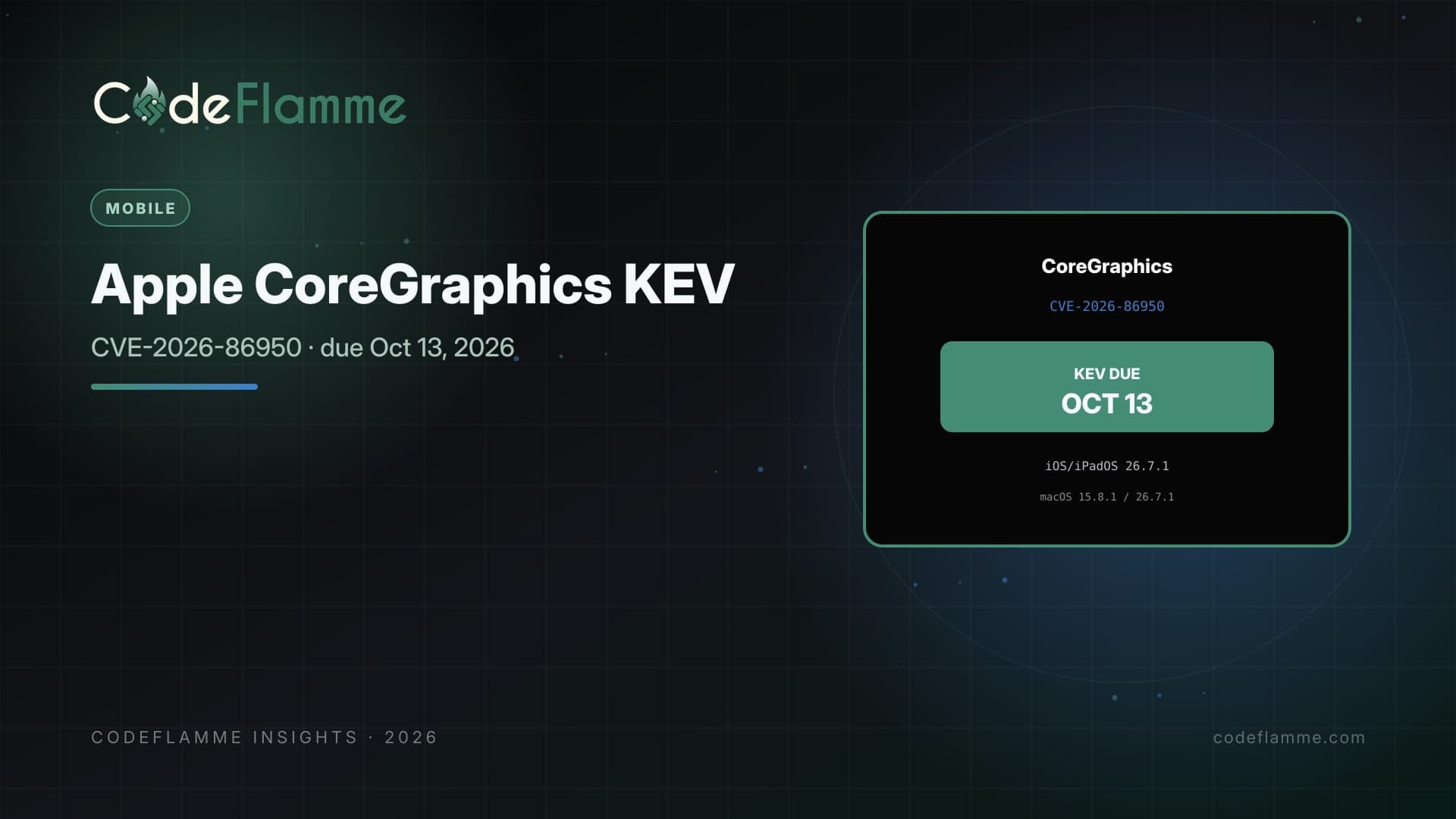
On September 28, 2026, Apple released iOS 26.7.1 and iPadOS 26.7.1 fixing CVE-2026-86950 in CoreGraphics: an out-of-bounds write addressed with improved bounds checking. Impact, in Apple's words: processing a maliciously crafted file may lead to arbitrary code execution. Apple states it is aware of a report that the issue may have been exploited in an extremely sophisticated attack against specific targeted individuals on versions of iOS before iOS 27. Matching macOS fixes shipped as Sequoia 15.8.1 and Tahoe 26.7.1. CISA added CVE-2026-86950 to the Known Exploited Vulnerabilities catalog on September 29, 2026, with a remediation due date of October 13, 2026 — tomorrow for U.S. federal civilian agencies under BOD 26-04 timelines. If your company MDM-manages iPhones for field sales, clinical workflows, or contractor BYOD, this is a same-week patch campaign, not a "next maintenance window" story.
What "sophisticated attack" still means for ordinary fleets
Apple's wording targets a narrow, high-skill exploitation narrative. That does not make the CVE optional for everyone else. KEV listing means CISA believes exploitation evidence meets catalog criteria; federal due dates become the de facto SLA many enterprises and insurers copy. Zero-click or document-parsing bugs in graphics stacks historically move from targeted use into broader kits once researchers reverse the patch. Treat October 13 as the compliance floor and patch earlier when MDM allows. Also clarify scope for mobile product teams: this is an OS-level CoreGraphics issue, not a bug in your React Native or Flutter app binary. You still own the fleet outcome when your customers or employees use corporate devices to run your app — especially if you publish MDM configuration guidance or manage devices under a services contract.
MDM and B2B mobile checklist
1. Declare the minimum OS. Push a compliance policy that requires 26.7.1 (iOS/iPadOS) before Monday morning standups, not after the federal clock expires. 2. Supervised vs BYOD. Supervised devices can force updates; BYOD needs clear deadline messaging, App Store update prompts, and a cutoff for access to sensitive SSO apps if policy allows. 3. Developer Macs. Xcode hosts and CI Macs on Sequoia/Tahoe need the matching 15.8.1 / 26.7.1 builds. A patched phone fleet sitting next to an unpatched design Mac that opens the same PDFs is an incomplete story. 4. Document parsers in your app. You cannot "patch CoreGraphics" from JS, but you can reduce drive-by risk: open untrusted documents in a sanitized viewer, avoid auto-rendering email attachments in WebViews, and keep third-party PDF SDKs current. 5. Evidence. Export MDM compliance reports showing percent-on-26.7.1 by October 13. Buyers and internal audit will ask.
Apple CVE-2026-86950 KEV checklist (due 2026-10-13)
[ ] Confirm iOS/iPadOS fleet ≥ 26.7.1 (Apple support HT149226 family)
[ ] Confirm macOS Sequoia ≥ 15.8.1 and Tahoe ≥ 26.7.1
[ ] MDM: force / deadline update + block noncompliant SSO if policy allows
[ ] Patch CI/design Macs — not only phones
[ ] Review in-app document/PDF auto-open paths for untrusted files
[ ] Keep compliance export for audit / customer security reviews
Founder takeaway
CVE-2026-86950 is an actively tracked Apple CoreGraphics out-of-bounds write with a CISA KEV due date of October 13, 2026. Move corporate iOS/iPadOS to 26.7.1 and macOS to the matching Sequoia/Tahoe fixes, treat MDM compliance as a product reliability issue for field teams, and stop waiting for a second news cycle. Mobile SaaS companies that only patch their app store binary while employee phones lag will fail the questionnaire that arrives the week after the federal deadline.
How this interacts with your mobile release train
App Store upload floors (Xcode 26 / iOS 26 SDK) are separate from this KEV. You can ship a modern SDK build to devices that have not yet reached 26.7.1 — and those devices remain exposed at the OS layer until MDM or users update. Do not tell leadership "we shipped a build" when the risk is CoreGraphics on the handset OS. For TestFlight external testers on personal devices, send a dated note: minimum iOS 26.7.1 for continued access to builds that handle sensitive documents. Testers opening malicious PDFs on lagging OS versions recreate the advisory's attack surface inside your beta program.
Contractor BYOD is the perennial hole. If contractors access production admin tools from personal iPhones, either enforce compliance via your MDM of record or cut the access path. KEV week is a bad time to discover shadow device fleets.
What to tell security questionnaires
Answer with primary sources: Apple's iOS 26.7.1 security content page (CVE-2026-86950), CISA KEV due date October 13, 2026, and your MDM compliance percentage. Avoid speculative language about who was targeted. Auditors want floors and evidence, not threat-intel fan fiction.
Schedule a 48-hour check after the October 13 deadline: percent compliant, exceptions with executive sign-off, and any devices that bounced the update. Exceptions without expiry dates become permanent vulnerabilities.
Operationally, assign a single owner for this topic inside your company calendar this month. Put the primary-source links in the ticket, schedule the verification steps above, and refuse to close the ticket until evidence (version strings, screenshots, or policy exports) is attached. Teams that "align in Slack" without artifacts rediscover the same gap on the next questionnaire or the next KEV weekend. CodeFlamme's bias is simple: dated owners, primary sources, and reversible changes beat heroic fire drills.
Operationally, assign a single owner for this topic inside your company calendar this month. Put the primary-source links in the ticket, schedule the verification steps above, and refuse to close the ticket until evidence (version strings, screenshots, or policy exports) is attached. Teams that "align in Slack" without artifacts rediscover the same gap on the next questionnaire or the next KEV weekend. CodeFlamme's bias is simple: dated owners, primary sources, and reversible changes beat heroic fire drills.