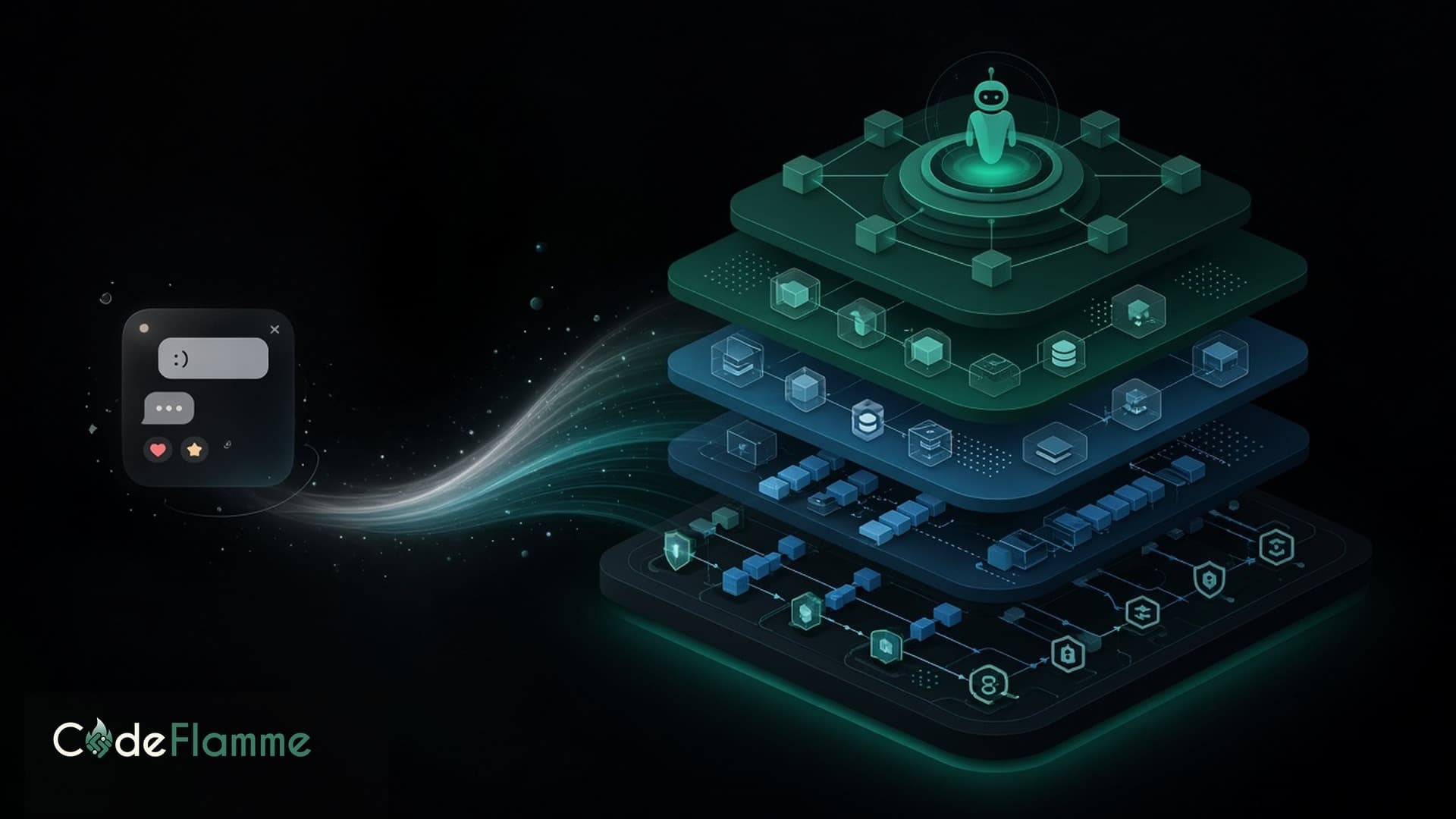
Many teams have the same artifact: a Next.js app with a streaming chat panel, an AI SDK call, and a README that says “agents.” Enterprise buyers ask about tenancy, permissions, approvals, and audit — and the demo goes quiet. The path from chatbot to enterprise-ready agents is sequential architecture, not a bigger model. Here is a build order that keeps demos honest and roadmaps fundable.
Stage 0 — Streaming chat done right
Solid auth, rate limits, abortable streams, and no secrets in the client. Persist messages per user. Redact logs. This is table stakes. If stage 0 is sloppy, later agent stages inherit chaos.
Stage 1 — Tools with a domain layer
Expose a small tool catalog that calls your real domain services — not raw database access. Each tool has auth checks identical to UI actions. Return structured errors. Add idempotency keys for mutating tools. You now have an agent-shaped client of your backend, still assistive.
Stage 2 — Tenancy hard walls
Every retrieval, tool call, and memory write is tenant-scoped. Test cross-tenant attempts as a release gate. Multi-tenant AI failures are company-ending; treat them like payment bugs. Shared caches and embedding indexes need the same discipline as shared databases.
Stage 3 — Approvals and durable runs
Promote high-blast tools to approval gates. Persist run state so HITL can pause overnight. Resume safely after deploys. At this stage you can honestly say “agent” for workflows that change money, data, or outbound messages.
Stage 4 — Audit, evals, and admin UX
Exportable audit, prompt/model versions on each run, eval suites in CI, tenant admin controls to pause agents, and docs that match behavior. This is what enterprise security reviews look for. Skipping stage 4 keeps you stuck in mid-market forever — or stuck in endless custom questionnaires.
What not to do
Do not market autonomy you cannot pause. Do not add twenty tools before five are safe. Do not bolt tenancy on after the first big logo asks. Do not confuse a slick chat UI with enterprise readiness. Next.js and modern AI SDKs are excellent for stages 0–1. Durability, tenancy, and governance are still product-engineering craft. Plan them explicitly and your demo becomes a platform instead of a dead end.
Team shape along the journey
Early stages can live with a full-stack engineer and a designer. Tenancy and approvals need backend discipline and security review. Audit and evals need someone who owns quality as a release criterion. Hire or contract for the stage you are entering — do not expect the chatbot author alone to invent enterprise governance under deadline pressure. Use design partners at each stage. A mid-market admin who will actually click approvals teaches more than a slide from an analyst report.
Documentation as a product surface
Enterprise buyers read docs before they trust demos. Document tool catalogs, permission models, data flows, and run lifecycle. Keep docs versioned with the product. Outdated screenshots of a chatbot when you sell agents create doubt. Security questionnaires should quote the same docs. One source of truth reduces contradictory answers across sales engineers.
Commercial readiness tracks technical stages
Update packaging as capabilities mature: assistive chat on lower plans; approved agents and audit exports on plans that can bear the support load. Selling enterprise agents on starter pricing without support capacity creates churn and ugly references. When stage 4 is real, your discovery calls change tone — from “look what the model can say” to “here is how your admin controls risk.” That is the conversation that closes durable revenue.
Migration story for early users
If early adopters loved the chatbot demo, explain what changes as you add tenancy walls and approvals. Some power users will feel slowed by gates. Offer roles: builders in sandboxes with looser rules; production roles with stricter policy. Communicate the why — enterprise readiness protects everyone, including the early fans who want your company to survive a serious incident. Version your API and tool schemas. Breaking tool contracts silently will poison agent runs that customers built. Durability includes compatibility discipline. Celebrate stage graduations internally. Shipping audit export is as launch-worthy as a new model integration. Culture that only celebrates demos will never finish enterprise readiness.
Measure stage completion with exit criteria: stage 1 ends when mutating tools are idempotent and auth-parity tested; stage 2 ends when cross-tenant evals are green in CI; stage 3 ends when an approval can pause overnight and resume; stage 4 ends when a customer admin can export audit without opening a ticket. Those criteria keep “almost enterprise” from becoming a permanent state. Ship the path in public roadmap language so design partners know what is coming and can plan their own security reviews against your stages.
The through-line is discipline: each stage adds policy and proof, not just cleverness. Next.js remains a strong UI and API layer; enterprise readiness lives in tenancy, approvals, and audit around it. Build that spine once and every new tool rides on rails instead of inventing risk anew.